
Departmental Results Report 2024-25
On this page
At a glance
This departmental results report details Courts Administration Service’s actual accomplishments against the plans, priorities and expected results outlined in its 2024–25 Departmental Plan.
Key priorities
The Courts Administration Service identified the following key priorities for 2024-25:
- Digital Courts: Deliver digital solutions that provide for the effective management of Court business, offer self-service to litigants and improve access to justice.
- Our people: Attract, retain and develop a highly skilled, diverse and engaged workforce. Optimize our work environment and strengthen management excellence.
- Court facilities: Deliver modern, equipped, accessible and secure federal Court facilities across Canada.
- Service excellence: Provide consistent, quality and timely client-centric services. Modernize our practices, processes and tools, and integrate new business and technological solutions.
Highlights for the Courts Administration Service in 2024-25
- Total actual spending (including internal services): $135,721,307
- Total full-time equivalent staff (including internal services): 884.
For complete information on the Courts Administration Service’s (CAS) total spending and human resources, read the Spending and human resources section of its full departmental results report.
Summary of Results
The following provides a summary of the results the department achieved in 2024-25 under its main areas of activity, called “core responsibilities.”
-
Core responsibility 1: Administration services for the federal Courts
- Actual spending: $94,012,110
- Actual full-time equivalent staff: 618
CAS received additional targeted funding in 2023–24 and 2024–25 to advance critical priorities, specifically: the Strengthen Service and Digital Capabilities to Modernize Canada’s Federal Courts (SSDC) initiative, the National Courts Facilities Modernization Program (NCFMP), and funding to modernize CAS's already-existing translation operations program. This targeted funding represents almost half of CAS’s total approved voted funding. The remainder represents regular operating funding for the Courts, which is under significant pressure.
In fact, 2024–25 was a particularly challenging year for CAS, as the Courts faced increased complexity and volume in caseloads, most notably in immigration, where filings have quadrupled compared to pre-pandemic levels. Funding has not kept pace with this surge of cases nor with new legal obligations. The expiration of Asylum-related funding, without renewal, and the insufficiency of temporary funding related to the amendments to the Official Languages Act, further compounded the financial strain on CAS’s regular operating funding to support the Courts’ operations.
- In Budget 2019, to bolster Canada’s asylum system, the federal government permanently increased the complement of Federal Court judges from 36 to 39. However, the funding to operationally support these judges – $3.6 million per year – was time-limited and ended in March 2023. Since then, CAS has been forced to absorb these costs into its regular operating funding.
- Amendments to the Official Languages Act, created a new requirement to make available simultaneously, in both official languages, final decisions, orders or judgments of “precedential value”, starting in June 2024. Partial, temporary funding was obtained through Budget 2024; however, with an existing backlog of 2000 decisions awaiting translation and revision, and despite implementing new technologies, CAS is not able to sustain its operations without the appropriate level of resources to meet these new legislative requirements, particularly as the temporary allocated funding comes to an end in March 2027.
To address mounting financial pressures, CAS conducted an internal strategic review to identify and prioritize the most urgent needs, with the goal of enhancing efficiency and streamlining operations. This led to the implementation of difficult but necessary measures, including the termination of term positions, a staffing freeze, and preparations for the elimination of certain indeterminate roles in the upcoming fiscal year. Operating expenditures were also reduced in targeted areas such as translation services, training, travel, professional services, and protection services. Despite these efforts, CAS was compelled to temporarily reallocate funds from the NCFMP to meet its financial obligations for 2024–25. These funds must be reimbursed by 2028–29.
While CAS was able to temporarily address its immediate operating pressures in 2024–25, the current operating financial model is not sustainable in the long term and poses risks to the organization’s ability to meet its mandate to serve Canada’s national Courts effectively. CAS will continue to experience risks and vulnerabilities that, left unaddressed, will impact CAS’s ability to provide necessary Court operations and services to the judiciary as well as the latitude to address other longstanding risks, such as data for decision-making, cybersecurity and critical infrastructure. CAS's capacity to mitigate these risks is constrained under current circumstances, making them more likely to manifest, resulting in further Court delays and growing backlogs in the coming years.
Despite our budgetary issues, CAS remained adaptable, forward focused, and dedicated to delivering value to the Courts we serve. We consistently challenged ourselves to be more efficient in our operations, more innovative in our thinking, more resilient in the face of change and financial uncertainty, and more proactive in solving problems. As a result, we not only adapted – we built. In 2024–25, we laid down measures that form a solid foundation for the transformation we are continuing to drive across the organization. In 2024–25, CAS:
- Advanced the development of CAS’s first Digital Strategy (2025–27) in partnership with the 4 national Courts. By embracing modern digital platforms, automation, and human-centric design, the strategy provides a shared vision for more accessible Court services, efficient operations, and strengthened public trust, while setting the foundation for major initiatives such as the Digital Courts Modernization (DCM) project.
- Incrementally modernized and stabilized critical and at-risk legacy systems and advanced the DCM project by finalizing scope, exploring solution options, and engaging with users to develop a modern, integrated, and resilient digital Courts system.
- Continued to deliver on the multi-year NCFMP, a historic investment that requires careful planning, strong governance, and sustained collaboration at all levels. The landmark accomplishment in 2024–25 was beginning construction on our new, dedicated Montréal national Courts judicial complex, which is scheduled for completion in 2027.
- Modernized CAS registry training offerings for the Federal Court of Appeal, the Federal Court, and the Tax Court of Canada, by creating updated training modules for registry officers, promoting consistency and shared learning and ensuring practical, procedural training is provided to both new and existing staff based on documented procedures.
- Advanced a multi-year plan to use temporary funding to meet new legislative requirements under the Official Languages Act by targeting improvements to translation processes and services and initiating the use of artificial intelligence-assisted translation tools to support efficiency and consistency in making Court decisions available in both official languages.
- Initiated work to develop a human resources (HR) strategic plan, to identify strategic HR priorities, guide future investment decisions, and support workforce development, which will be finalized in 2025–26.
- Held roundtable discussions on Values and Ethics with employees which informed the renewal of the CAS Code of Conduct.
For more information on CAS’s Administration services for the federal Courts the ‘Results – what we achieved” section of its departmental results report.
From the Chief Administrator and Chief Executive Officer
It is my pleasure to present the 2024–25 Departmental Results Report for the Courts Administration Service, which presents our achievements over the past fiscal year. CAS is a small department that provides arm’s length services to the 4 national Courts: the Federal Court of Appeal, the Federal Court, the Court Martial Appeal Court of Canada and the Tax Court of Canada. Our work plays a pivotal role in facilitating access to justice by making it possible for the public to bring disputes and other matters before the Courts. This contributes to preserving confidence in Canada’s Courts system, the rule of law and, ultimately, our democracy.
This past year was marked by 2 competing dynamics: the excitement of advancing transformative initiatives, and the stark reality of doing so with extremely limited resources. While we celebrated progress in key areas, much of our focus was on navigating financial constraints, which meant making difficult choices to contract our operations while preserving direct services to the Courts. These responsive measures provided temporary relief, but deepened the impact of our chronic underfunding and underscored the urgency of addressing our structural financial challenges.
In the face of these pressures, CAS made meaningful strides in the digital modernization of the Courts. We stabilized the Courts’ legacy systems, strengthened cybersecurity and expanded e-courtroom capacity across Canada – critical steps toward a more accessible and resilient justice system. We also advanced the development of CAS’s first Digital Strategy, in partnership with the 4 national Courts, which will guide transformation towards a more digital, responsive, accessible and human-centred national Courts system. In parallel, we completed planning and explored solution options for the Digital Courts Modernization Project, which will replace and digitize aging Courts case management systems.
At the same time, we continued to advance plans to expand and improve Court facilities across Canada to better meet the needs of all Canadians. This included starting construction on the new judicial national Courts judicial complex in Montréal, a major milestone in our infrastructure renewal efforts.
In a context of rising demands and fiscal restraint, despite efforts to streamline operations, adjust our workforce and find efficiencies to stabilize Court operations, we required a temporary reallocation of funds from the National Courts Facilities Modernization Program to meet financial obligations and balance our operating budget. These funds must be reimbursed by 2028–29, with significant implications for our people and long-term viability.
CAS’s financial situation is only the latest in a series of challenges for our organization. It compounds challenges of recent years: the pandemic, the surge in immigration cases, the Canada convoy protest and the federal public service strike. The cumulative impact of these pressures continues to be felt across CAS. The imminent end of incremental funding for bilingual publication of decisions will bring a further challenge to our ability to meet official language obligations.
Despite these various challenges, CAS remains committed to managing operations effectively, modernizing within available budgetary limits, and upholding the high-quality service that Members of the Courts, litigants, and the public rely on. I want to thank the exceptional staff and teams across CAS. Your professionalism, dedication and resilience have been the driving force behind every achievement. You have risen to every challenge with integrity and purpose, and I am profoundly proud and grateful for your contributions.
I also wish to express my deepest gratitude to the Chief Justices, Associate Chief Justices and members of the judiciary for their ongoing collaboration and support. Together, we continue to uphold access to justice, the independence of the Courts and the public’s trust – principles that are fundamental to our democracy.
Darlene H. Carreau LL.B.
Chief Administrator and Chief Executive Officer
Results – what we achieved
Core responsibilities and internal services
Core responsibility 1: Administration services for the federal Courts
In this section
- Description
- Quality of life impacts
- Progress on results
- Details on results
- Key risks
- Resources required to achieve results
- Related government priorities
- Program inventory
Description
Provide timely and efficient judicial, registry, court security and electronic court services to the Federal Court of Appeal, the Federal Court, the Court Martial Appeal Court of Canada and the Tax Court of Canada; coordinate the provision of services among the four Courts; and safeguard the independence of the Courts by placing administrative services at arm’s length from the Government of Canada.
Quality of life impacts
CAS makes an important contribution to Canada’s Quality of Life Framework. By providing administrative services to the Courts, CAS contributes to the domain of “Good governance”, and the subdomain of “Democracy and institutions”, through the activities mentioned in the core responsibility description. CAS contributes to the “Confidence in institutions” indicator.
Progress on Results
This section details the department’s performance against its targets for each departmental result under Core responsibility 1: Administration service for the federal Courts.
Table 1: Members of the Courts are provided with the required information and support services to hear matters and render decisions.
Table 1 shows the target, the date to achieve the target and the actual result for each indicator under Members of the Courts are provided with the required information and support services to hear matters and render decisions in the last three fiscal years.
| Departmental Result Indicator | Target | Date to achieve target | Actual Results1 |
|---|---|---|---|
| Percentage of court files that are complete and processed accurately. | Exactly 100% | March 31, 2025 | 2022–23: 95% 2023–24: 95% 2024–25: 93.75% |
|
1 Represents the average for the Federal Court of Appeal, the Federal Court and the Court Martial Appeal Court of Canada. The Tax Court of Canada does not track performance data for this indicator. |
|||
Table 2: Members of the Courts, court users and the public can access court services, court decisions and processes electronically without undue delays.
Table 2 shows the target, the date to achieve the target and actual result for each indicator under Members of the Courts, court users and the public can access court services, court decisions and processes electronically without undue delays in the last three fiscal years.
| Departmental Result Indicator | Target | Date to achieve target | Actual Results |
|---|---|---|---|
| Percentage of final court decisions posted on the Courts’ websites in both official languages, within established timeframes2 | At least 95% | March 31, 2025 | 2022‑23: 90% 2023‑24: 94% 2024‑25: 98% |
| Percentage of court documents that are filed electronically. | At least 80% | March 31, 2025 | 2022‑23: 82% 2023‑24: 88% 2024‑25: 90.5% |
|
2The service standard up until 2024–25 was 18 months. The 2025–26 service standard is now 3 months. |
|||
Table 3: The Courts maintain their ability, as the government’s independent judicial branch, to protect judicial independence.
Table 3 shows the target, the date to achieve the target and actual result for each indicator under The Courts maintain their ability, as the government’s independent judicial branch, to protect judicial independence in the last three fiscal years.
| Departmental Result Indicator | Target | Date to achieve target | Actual Results3 |
|---|---|---|---|
| Level of satisfaction of the members of the Courts with the adequacy of services provided to discharge their judicial functions. | At least a rating of 4 on a scale of 1-5 | March 31, 2025 | 2022‑23: not evaluated 2023‑24: not evaluated 2024‑25: not evaluated |
| Level of satisfaction of the members of the Court with the security afforded to them in discharging their judicial functions. | At least a rating of 4 on a scale of 1-5 | March 31, 2025 | 2022‑23: not evaluated 2023‑24: not evaluated 2024‑25: not evaluated |
|
3 Measurement of these results has been deferred. |
|||
The Results section of the Infographic for CAS on GC Infobase page provides additional information on results and performance related to its program inventory.
Details on results
The following section describes the results for Administration services for the federal Courts in 2024–25 compared with the planned results set out in CAS’s departmental plan for the year.
Members of the Courts are provided with the required information and support services to hear matters and render decisions.
Results achieved
Digital Courts:
- Continued to incrementally modernize and stabilize critical and at-risk legacy systems to ensure availability and performance in support of Court proceedings. For example, we are accelerating the decommissioning of legacy systems by advancing the Proceedings Management System Improvement project, which will provide interim system improvements in advance of the transformation planned with the Digital Courts Modernization (DCM) project.
- Advanced the development of CAS’s first Digital Strategy (2025–27) in partnership with the 4 national Courts. The strategy was published in May 2025 and provides a shared vision for digital access to justice, efficient service delivery, and strengthened public trust, while setting the foundation for major initiatives such as the DCM project.
- Advanced the DCM project by finalizing scope, exploring solution options, and engaging with users to work towards a modern, integrated platform for managing Court proceedings, filings, and registry operations.
- Leveraged cloud-based platforms (e.g., Microsoft 365) to improve service management, workplace collaboration and productivity.
Our people:
- Modernized CAS registry training offerings for the Federal Court of Appeal, the Federal Court, and the Tax Court of Canada, by creating updated training modules for registry officers, promoting consistency and shared learning, and ensuring practical, procedural training is provided to both new and existing staff based on documented procedures.
- Developed a standardized suite of registry training modules, integrated into the CAS departmental learning system, to ensure consistent delivery, tracking and continuous improvement of registry knowledge and practices.
- Introduced enhanced onboarding and training programs to support the successful integration of new registry employees, equipping them with the tools and knowledge needed to contribute effectively from day one.
- Implemented modern and agile strategies to recruit, retain and develop highly skilled employees in registry and judicial services.
- Launched the Federal Court Registry Knowledge Center, a centralized digital hub that provides easy access to essential Registry materials, tools, guides, and resources, enhancing efficiency and knowledge sharing across registry teams.
- Modernized core Court registry processes for immigration proceedings at the Federal Court, which represent 90% of case volume, including the development of comprehensive Standard Operating Procedures.
Court facilities:
- Continued to deliver on the National Courts Facilities Modernization Program (NCFMP), a multi-year, multi-phase program aimed at transforming Canada’s national Court infrastructure. Phases 1 and 2 are fully funded and currently underway. These phases include the modernization of existing facilities in Winnipeg, Toronto, and Ottawa (200 Kent Street and 90 Sparks Street), as well as the construction of new judicial complexes in Victoria, Saskatoon, Oakville, Montréal, and Halifax. The program focuses on improving accessibility, security, and integrating modern courtroom technologies, including advanced audio-visual systems.
- Completed the schematic design for the new Montréal national Courts judicial complex, with construction launched in Spring 2024. Completion is scheduled for 2027.
- Initiated design work for the projects in Victoria, Winnipeg, Toronto, Ottawa (200 Kent), and Halifax.
- Continued planning work for facilities in Saskatoon and Ottawa (90 Sparks).
- Developed a full courtroom mock-up including integrated technology. Feedback from Members of the Courts, registry and litigants is informing updates to CAS’s National Design Standard and a national e-courtroom technology standard, enabling consistent and expanded digital functionality across courtrooms.
- Upgraded more than 15 courtrooms in Toronto, Montréal, Ottawa, and Vancouver with enhanced audio-visual systems, new displays, microphones, and interpretation support, and hybrid hearing capabilities via Zoom and Teams.
Service excellence:
- Pursued operational efficiencies and internal reallocations to address financial pressures through ongoing service optimization.
- Completed a comprehensive service inventory, documenting the full range of Court and registry services provided to Members of the Courts and Court users – establishing a baseline for performance and continuous improvement.
- Revised the Policy on Translation, Revision, and Publication, clarifying service standards for simultaneous publication requests and the translation and revision of final decisions.
- Developed business intelligence tools, including dashboards and a centralized data warehouse, to provide real-time operational insights that support decision-making, resource allocation, and performance measurement.
- Led a Pilot Project in collaboration with the Federal Court and lawyers representing litigants to reduce the length of time between the filing date and the final decision in study permit immigration cases, saving over 300 days on files on average.
Members of the Courts, court users and the public can access court services, court decisions and processes electronically without undue delays.
Results achieved
Digital Courts:
- Advanced development of new digital solutions, including expanded e-payment capabilities and self-service options for litigants for the Federal Court.
- Developed an artificial intelligence-enabled solution to improve internal access to registry information.
- Launched a robotic process automation solution to support the issuance of immigration Leave Dismissed Certificates, enabling automated generation of certificates for ensuring Court decisions are sent to litigants in less than 10 business days compared to a few months previously.
Our people:
- Delivered targeted training and knowledge-sharing sessions to enhance digital, data and service literacy across the organization.
- Increased awareness and adoption of artificial intelligence and modern tools and practices through ongoing user support, guidance, and peer-to-peer learning initiatives.
- Built internal capacity to support digital transformation by strengthening expertise in agile delivery, service design, and data-informed decision-making.
- Recruited and retained highly skilled jurilinguists with deep expertise in judicial translation and the use of neural translation as a tool supporting the timely and accurate publication of decisions in both official languages.
- Implemented a policy to provide direction to registry employees and management on taking proactive action on the management of difficult interactions, and on prioritizing employee safety and well-being, while ensuring fair and equitable services for all litigants.
Court facilities:
- Completed the development of an e-courtroom technology standard to be implemented in courtrooms to expand and standardize e-court functionality in all courtrooms across Canada.
Service excellence:
- Advanced a multi-year plan to meet new legislative requirements under the Official Languages Act, with targeted improvements to translation processes and services.
- Revised service standards for translation, revision and publication of Court decisions of “precedential value” to provide faster access, in both official languages, to Canadians.
- Introduced artificial intelligence-assisted translation tools to enhance efficiency and consistency in making Court decisions available in both official languages.
- Enhanced e-filing portals for the Federal Court of Appeal and the Federal Court, improving client-facing information and guidance to simplify online document submission and feedback collection.
- Continued work to optimize CAS’s translation, revision and publication processes by advancing the implementation of a new database.
The Courts maintain their ability, as the government’s independent judicial branch, to protect judicial independence.
Results achieved
Digital Courts:
- Advanced a memorandum of understanding with Shared Services Canada to formally recognize judicial independence in the procurement and use of digital technologies, including cloud-based solutions.
- Strengthened cybersecurity and disaster recovery capabilities by increasing cybersecurity capacity, implementing enterprise-grade protection such as layered security, and operationalizing a Security Assessment and Authorization process that integrates recommendations from the Canadian Judicial Council and Government of Canada requirements.
- Conducted a cybersecurity tabletop exercise to test and refine CAS’s emergency response plans, strengthening organizational preparedness and resilience against digital threats.
Our people:
- Strengthened CAS’s cybersecurity workforce by attracting and retaining specialized talent to protect judicial information and systems, ensuring the Courts can operate securely and with confidence in an increasingly complex digital environment.
- Delivered a comprehensive cybersecurity awareness program for CAS employees and Members of the Courts, reinforcing best practices and building a shared understanding of cyber risks. This initiative has enhanced our collective ability to safeguard sensitive information and maintain the integrity of Court operations.
Court facilities:
- Completed conceptual designs for all NCFMP phase 1 and 2 projects bolstering physical security elements to safeguard judicial independence.
- Delivered targeted security enhancements across the facility portfolio to support a safe and secure environment for the Courts.
Service excellence:
- Strengthened resilience and service continuity by updating business continuity plans and operational contingency plans, and by enhancing procedures for threat and risk assessments.
Key risks
At CAS, risk management is the practice of considering threats and opportunities when making decisions about how we deliver on our core responsibility of providing Administration services to the federal Courts.
This section describes the key measures that CAS put in place to address or mitigate the risks outlined in CAS 2024–25 Departmental Plan, while considering our financial situation.
Expectations for services
Current organizational capacity and resources will not enable the organization to keep up with the expectations of the Courts and Canadians. CAS mitigated some of the risks through SSDC and NCFMP.
In 2024, 24,667 new immigration proceedings were commenced in the Federal Court, which is approximately 4 times the annual average of 6,203 cases initiated between 2015 and 2019. The volume of cases continues to rise, with the Court anticipating between 31,000 and 33,000 immigration filings in 2025. Filings across other types of proceedings have also increased by 68% compared to pre-pandemic levels.
To help address the rise in cases filed, the Federal Court has amended its Consolidated General Practice Guidelines and Consolidated Practice Guidelines for Citizenship, Immigration and Refugee Protection Proceedings to reflect its commitment to dealing with these challenges and improving the efficiency of its procedures. These amendments enabled the registry to streamline mandamus file processing and reduce manual data entry in the case management system. Furthermore, the registry standardized its approach to notifying the Court of file deficiency, simplified post-hearing documentation and prioritized perfected/completed immigration cases for processing.
CAS continues to face challenges related to organizational capacity, processes, and tools necessary to manage the increasing immigration workload effectively. To support these efforts, CAS implemented digital initiatives, including the implementation of Robotic Process Automation to enhance operational efficiency and streamline processes.
Security
The security and privacy expectations of Members of the Courts, Court users may not be met. CAS mitigated the risk by continuing to increase Members of the Courts’ security awareness. For example, key emergency procedures were made more accessible to employees to help equip employees to manage high-stress situations. A policy was implemented to provide direction to registry employees and management on taking proactive action on the management of difficult interactions, and on prioritizing employee safety and well-being, while ensuring fair and equitable services for all litigants.
Disaster recovery and business continuity
There is a risk that CAS will not be able to maintain an acceptable level of service to the Courts and users of the Courts in the event of disruption. To mitigate this risk, CAS is refining and updating its Business Continuity Plan and Operational Contingency Plans, clarifying roles, responsibilities, and escalation protocols. Threat and risk assessments were reviewed and updated, with a focus on cyber and infrastructure risks. Cybersecurity awareness activities, including a tabletop exercise, were delivered to improve organizational preparedness.
To further mitigate the risk, CAS continued the decommissioning of legacy systems by advancing the Proceedings Management System Improvement project and the DCM project. Together, these projects will reduce technology-related risks, strengthen system reliability, and improve operational resilience.
CAS also advanced work to address long-standing digital and cyber deficiencies within its secure facility. These efforts are aimed at creating a more modern and secure environment with stronger cyber and disaster recovery capabilities, ensuring that this critical facility can continue to support Court operations during potential disruptions.
Information for decision-making
There is a risk that authoritative data and information may not be available to support timely and informed decision-making. To mitigate this risk, CAS developed a Data Strategy, as well as an Information Management and Records Management Strategy to improve data quality, literacy, accessibility, and stewardship. A data governance framework was also initiated to guide consistent practices across CAS and the Courts. CAS also developed new performance dashboards to support service monitoring.
As CAS prepares to fully digitize Court operations, it advanced work to strengthen information, records, and data management practices, ensuring the integrity and security of Court records. These efforts will provide reliable and consistent information to support Court proceedings, improve Court operations, and inform operational planning.
Coming into force of amendments to the Official Languages Act
Amendments to the Official Languages Act created a new requirement to make available simultaneously, in both official languages, final decisions, orders or judgments of "precedential value", starting in June 2024. This presented additional pressures for the organization, as CAS was already under-resourced in meeting current official languages obligations. Partial, temporary funding was obtained through Budget 2024, which was used to optimize CAS’s processes, expand the jurilinguistic team and implement a neural-translation tool, all aimed at enhancing overall operational effectiveness. However, with rising caseloads and limited resources, CAS is not able to keep up with demands and continues to lose ground in supporting the Courts in meeting their Official Languages Act obligations, particularly as allocated funding comes to an end in March 2027.
Organizational funding levels
Due to financial constraints, compounded by the expiration of Asylum-related funding and the insufficiency of temporary funding related to the amendments to the Official Languages Act, CAS had insufficient regular operating funding to fulfill its mandate in 2024–25. In response, CAS conducted an internal strategic review to identify and prioritize its most urgent needs, with the goal of enhancing efficiency and streamlining operations. This led to the implementation of difficult but necessary measures, including the termination of term positions, a staffing freeze, and preparations for the elimination of certain indeterminate roles in the upcoming fiscal year. Operating expenditures were also reduced in targeted areas such as translation services, training, travel, professional services, and protection services. Despite these efforts, CAS was compelled to temporarily reallocate funds from the NCFMP to meet its financial obligations for 2024–25. These funds must be reimbursed by 2028–29. While CAS was able to temporarily address its immediate operating pressures in 2024–25, the current operating financial model is not sustainable in the long term and poses risks to the organization’s ability to meet its mandate to serve Canada’s national Courts effectively. CAS will continue to experience risks and vulnerabilities that, left unaddressed, will impact CAS’s ability to provide necessary Court operations and services to the judiciary as well as the latitude to address other longstanding risks, such as data for decision-making, cybersecurity and critical infrastructure.
Resources required to achieve results
Table 4: Snapshot of resources required for Administration services for the federal Courts
Table 4 provides a summary of the planned and actual spending and full-time equivalents required to achieve results.
| Resource | Planned | Actual |
|---|---|---|
| Spending | $129,813,972 | $94,012,110 |
| Full-time equivalents | 600 | 618 |
The Finances section of the Infographic for CAS on GC Infobase page and the People section of the Infographic for CAS on GC Infobase page provide complete financial and human resources information related to its program inventory.
Related government priorities
This section highlights government priorities that are being addressed through this core responsibility.
United Nations 2030 Agenda for Sustainable Development and the Sustainable Development Goals
Our first 2023–27 Departmental Sustainable Development Strategy was tabled in Parliament in October 2023. This strategy aligns with the Federal Sustainable Development Strategy, and includes commitments relating to 3 Sustainable Development Goals (SDG):
- Advance reconciliation with Indigenous peoples and take action on inequality (SDG 10)
- Reduce waste and transition to zero-emission vehicles (SDG 12)
- Take action on climate change and its impacts (SDG 13)
Progress made against the goals is reported annually. The first 2023–24 annual report was published in fall 2024 and similarly, our progress report for 2024–25 will be published on CAS’s website in the fall of 2025.
More information on CAS’s contributions to Canada’s Federal Implementation Plan on the 2030 Agenda and the Federal Sustainable Development Strategy can be found in our Departmental Sustainable Development Strategy.
Program inventory
Administration services for the federal Courts is supported by the following programs:
- Judicial services
- Registry Services
- E-Court
- Security
Additional information related to the program inventory for Administration services for the federal Courts is available on the Results page on GC InfoBase.
Internal services
In this section
- Description
- Progress on results
- Resources required to achieve results
- Contracts awarded to Indigenous business
Description
Internal services refer to the activities and resources that support a department in its work to meet its corporate obligations and deliver its programs. The 10 categories of internal services are:
- Management and Oversight Services
- Communications Services
- Legal Services
- Human Resources Management
- Financial Management
- Information Management
- Information Technology
- Real Property
- Materiel
- Acquisitions
Progress on results
This section presents details on how the department performed to achieve results and meet targets for internal services.
In 2024–25, CAS undertook the following initiatives to achieve results in internal services:
- Initiated the development of a Human Resources (HR) strategic plan. This plan will identify key HR priorities, guide future investment decisions, and support long-term workforce development. It will be finalized in 2025–26 and serve as a roadmap for building a resilient, skilled, and future-ready organization.
- Refreshed our policy suite by actively engaging staff in the renewal of key documents, including the Directive on Conflicts of Interest, Code of Conduct, and Values and Ethics framework. Through roundtable discussions on Values and Ethics, employees contributed valuable insights that shaped the updated policies. The result is a modern, relevant, and clearly articulated statement of our values and expected behaviours designed to inspire and guide all employees in fostering an ethical and respectful workplace.
- Introduced a new external designated recipient for harassment complaints, enhancing confidentiality and trust in our reporting processes. Additionally, we established the position of Senior Officer for Disclosure of Wrongdoing and Fraud Risk Management, strengthening our organizational capacity to address misconduct and safeguard integrity.
- Delivered key initiatives under the Diversity and Inclusion Strategic Plan, including making training on unconscious bias/inclusion/anti-racism, Indigenous learning and reconciliation, and disability inclusion mandatory for all employees and managers; and creating a single resource hub for information, learning material and tools and points of contact related to employment equity, accessibility, diversity, inclusion and anti-racism.
- Implemented CAS’s first Accessibility Plan 2022–25, addressing the priority areas identified in the Accessible Canada Act: employment, the built environment, information and communication technologies, communication, procurement of goods, services and facilities, design and delivery of programs and services, and transportation. In December 2024, CAS published its second Progress Report 2024 which details progress made in all priority areas indicated in the plan.
- Completed a comprehensive review of internal and external governance structures, ensuring executive governance is grounded in clear authorities, decision-making pathways, and accountabilities. Implementation of recommendations is ongoing into 2025–26.
- Established a governance framework for digital modernization, ensuring disciplined oversight, risk management, and accountability throughout project delivery to protect investments and maintain alignment with strategic priorities.
- Continued to strengthen internal processes, driving leadership accountability and improving our ability to make timely, data-informed decisions by developing various dashboards and a robust quarterly reporting mechanism that helps inform decisions.
- Developed an Organizational Change Management Framework and embedded change management discipline and practices into CAS’s initiatives and projects.
- Delivered more timely strategic communications to external stakeholders, and internally to employees and Members of the Courts to keep them engaged on critical issues, priorities and innovation.
- Modernized operational training to foster employee development, retention and peer support by creating learning paths and updating learning content modules.
- Delivered a Data Strategy that positions data as a strategic asset, outlining a roadmap to modernize data management, address current challenges, and foster a culture of data-driven decision-making across CAS and the Courts.
- Introduced an Information Management Strategy to strengthen how information is organized, protected, and accessed. The strategy reinforces judicial independence, safeguards Court information, and enhances transparency and, efficiency in administrative services.
- Maintained an in-house internal audit capacity that provides objective assurance and advice on governance, risk management and control processes to enhance the organization's long-term success in fulfilling its mandate. Key areas of focus were fraud risk management, assurance over progress reporting to the Treasury Board of Canada Secretariat, and procurement of low dollar valued professional services.
Resources required to achieve results
Table 5 Resources required to achieve results for internal services this year
Table 5 provides a summary of the planned and actual spending and full-time equivalents required to achieve results.
| Resource | Planned | Actual |
|---|---|---|
| Spending | $38,286,646 | $41,709,197 |
| Full-time equivalents | 271 | 266 |
The Finances section of the Infographic for CAS on GC Infobase and the People section of the Infographic for CAS on GC Infobase provide complete financial and human resources information related to its program inventory.
Contracts awarded to Indigenous businesses
CAS is a Phase 3 department and has met this target for the last 5 fiscal years. In 2024–25, we exceeded this target, awarding 8.6% of our contracts to Indigenous businesses.
The following are key measures that CAS undertook to ensure that the 5% target continues to be met in the future:
- Continue to favour Indigenous businesses for the supply of office furniture as well as information technology-related equipment and services.
- Standing offers and supply arrangements are underway for facilities modernization projects as Indigenous set-aside procurement for office furniture.
- 100% of procurement staff have completed the mandatory course, Indigenous Considerations in Procurement, from the Canada School of Public Service.
We will continue to pursue procurement opportunities with Indigenous-led businesses, ensuring we continue to best meet the needs of Canadians, whom we serve.
Government of Canada departments are required to award at least 5% of the total value of contracts to Indigenous businesses every year.
CAS results for 2024-25:
Table 6: Total value of contracts awarded to Indigenous businesses4
As shown in Table 6, CAS awarded 8.6 % of the total value of all contracts to Indigenous businesses for the fiscal year.
| Contracting performance indicators | 2024-25 Results | ||
|---|---|---|---|
| Total value of contracts awarded to Indigenous businesses5 (A) | $1,762,222.02 | ||
| Total value of contracts awarded to Indigenous and non‑Indigenous businesses (B) | $20,609,388.23 | ||
| Value of exceptions approved by deputy head (C) | $0.00 | ||
| Proportion of contracts awarded to Indigenous businesses [A / (B−C) × 100] | 8.6 % | ||
|
4 “Contract” is a binding agreement for the procurement of a good, service, or construction and does not include real property leases. It includes contract amendments and contracts entered into by means of acquisition cards of more than $10,000.00. 5 For the purposes of the minimum 5% target, the data in this table reflects how Indigenous Services Canada (ISC) defines “Indigenous business” as either:
|
|||
CAS has awarded at least 5% of their total value of contracts annually to Indigenous businesses for the last 4 years. To create more opportunities for Indigenous business, CAS is continuously updating its procurement internal policies, improving existing procurement plans and continuing to work in collaboration with its largest business owners. CAS also identified commodities that are targeted to promote the use of Indigenous businesses.
In its 2025–26 Departmental Plan, CAS estimated that it would award 9 % of the total value of its contracts to Indigenous businesses by the end of 2024–25.
Spending and human resources
In this section
Spending
This section presents an overview of the department's actual and planned expenditures from 2022–23 to 2027–28.
Refocusing Government Spending
In Budget 2023, the government committed to reducing spending by $14.1 billion over five years, starting in 2023–24, and by $4.1 billion annually after that.
While not officially part of this spending reduction exercise, CAS respected the spirit of this exercise by doing the following:
- Reviewing programs and activities to ensure continued alignment with priorities.
- Enhancing operational efficiency to best meet current demands and modernize Court operations.
- Exercising sound financial stewardship while being innovative, agile and resilient.
Budgetary performance summary
Table 7: Actual three-year spending on core responsibilities and internal services (dollars)
Table 7 shows the money that CAS spent in each of the past three years on its core responsibilities and on internal services.
| Core responsibilities and internal services | 2024–25 Main Estimates | 2024–25 total authorities available for use | Actual spending over three years (authorities used) |
|---|---|---|---|
| Administration services for the federal Courts | 128,352,178 | 165,152,776 |
|
| Subtotal | 128,352,178 | 165,152,776 |
|
| Internal services | 37,598,743 | 41,853,534 |
|
| Total | 165,950,921 | 207,006,310 |
|
Analysis of the past three years of spending
The total authorities available for use in 2024–25 were $41.0 million higher than 2024–25 Main Estimates spending. This is due to new funding received for the National Court Facilities Management Program (NCFMP) – Phase 2 for $26.5 million, funding to modernize CAS's already-existing translation operations program for $3.1 million, funding for Procedural Fairness in Citizenship Revocation for $3.2 million, the operating budget carry forward from 2023–24 for $4.1 million, compensation for collective bargaining agreements for $1.4 million, paylist–related items for $0.8 million and an adjustment to statutory authority of $1.9 million. Almost half of CAS’s total approved budget is targeted for the Strengthening Service and Digital Capabilities to Modernize Canada’s Federal Courts (SSDC) initiative, the NCFMP, and the funding to modernize CAS's already-existing translation operations program and the other half of CAS’s budget represents regular operating funding, which is facing pressures.
The $27.6 million increase in actual spending from 2022–23 to 2024–25 primarily reflects strategic investments in people and modernization. This includes the financial impact of new collective bargaining agreements signed in 2023–24, as well as targeted funding in 2023–24 and 2024–25 to advance government priorities such as the SSDC initiative, the NCFMP, and the funding to modernize CAS's already-existing translation operations program.
The Finances section of the Infographic for CAS on GC Infobase offers more financial information from previous years.
Table 8: Planned three-year spending on core responsibilities and internal services (dollars)
Table 8 shows CAS’s planned spending for each of the next three years on its core responsibilities and on internal services.
| Core responsibilities and internal services | 2025–26 planned spending | 2026–27 planned spending | 2027–28 planned spending |
|---|---|---|---|
| Administration services for the federal Courts | 175,687,764 | 132,963,375 | 91,759,337 |
| Subtotal | 175,687,764 | 132,963,375 | 91,759,337 |
| Internal services | 33,052,761 | 33,103,877 | 33,277,125 |
| Total | 208,740,525 | 166,067,252 | 125,036,462 |
Analysis of the next three years of spending
The fluctuation of the planned spending from 2025–26 to 2027–28 is mainly attributable to the sunsetting of the funding to modernize CAS's already-existing translation operations program in 2026–27 as well as a decrease in the funding profile per year of the NCFMP. NCFMP funding is in a special purpose allotment (SPA), which allows unused funding to be carry forward into future years. A pending request to re-profile unspent funding for NCFMP will have further impact on the planned spending fluctuations.
The Finances section of the Infographic for CAS on GC Infobase offers more detailed financial information related to future years.
Funding
This section provides an overview of the department's voted and statutory funding for its core responsibilities and for internal services. Consult the Government of Canada budgets and expenditures for further information on funding authorities.
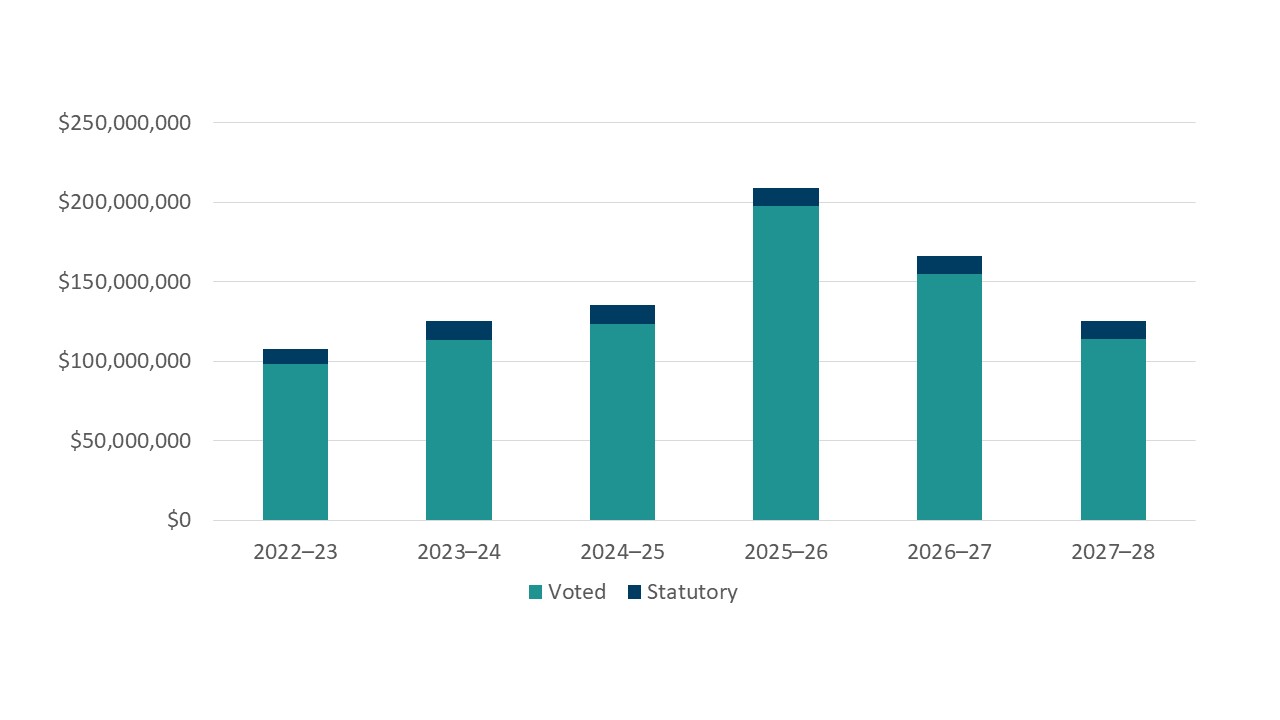
Graph 1: Approved funding (statutory and voted) over a six-year period
Graph 1 summarizes the department's approved voted and statutory funding from 2022-23 to 2027-28.
Text version of graph 1
Graph 1 includes the following information in a bar graph:
| Fiscal year | Statutory | Voted | Total |
|---|---|---|---|
| 2022-23 | 9,548,171 | 98,506,490 | 108,054,661 |
| 2023-24 | 11,745,320 | 113,382,348 | 125,127,668 |
| 2024-25 | 12,444,881 | 123,276,426 | 135,721,307 |
| 2025-26 | 11,016,793 | 197,723,732 | 208,740,525 |
| 2026-27 | 11,281,317 | 154,785,935 | 166,067,252 |
| 2027-28 | 11,080,548 | 113,955,914 | 125,036,462 |
Analysis of statutory and voted funding over a six-year period
There is a significant fluctuation to funding as CAS received additional targeted new multi-year funding to advance critical priorities such as the SSDC initiative, NCFMP, and the funding to modernize CAS's already-existing translation operations program. NCFMP and SSDC are SPAs which restrict the use of funds to specific programs and initiatives. Given this, these funds must be used for their intended purpose. The SPA funding for CAS in 2024–25 represents 48% of its total approved voted funding. The remainder represents regular operating funding for the Courts, which is under significant pressure.
Amendments to the Official Languages Act came into force in June 2024, requiring CAS to make available simultaneously, in both official languages, final decisions, orders or judgments of “precedential value”. This requirement was added to make available simultaneously decisions, orders or judgments determining a question of law of general public interest or importance and where the proceeding leading to its issuance were conducted in whole or in part in both official languages. As a result, significant effort and resources were required to implement operational changes to prioritize the processing of translation, revision and publication requests of decisions to be made available in both official languages simultaneously. With an existing backlog of 2000 decisions awaiting translation and revision, and despite implementing new technologies, CAS is not able to sustain its operations without additional resources to meet these new legislative requirements, particularly as allocated funding comes to an end in 2027.
The fluctuation in funding from 2022–23 to 2027–28 is primarily due to temporary new funding to deliver on:
- NCFMP – $269.4 million over 5 years from 2023–24 to 2027–28;
- SSDC – $12.2 million over 2 years from 2023–24 to 2024–25;
- Funding to modernize CAS's already-existing translation operations program – $9.6 million over 3 years from 2024–25 to 2026–27; and
- Compensation for the signing of new collective bargaining agreements.
In fact, 2024–25 was a particularly challenging year for CAS, as the Courts faced increased complexity and volume in caseloads, most notably in immigration, where filings have quadrupled compared to pre-pandemic levels. Funding has not kept pace with this surge of cases nor with new legal obligations. The expiration of Asylum-related funding, without renewal, and the insufficiency of temporary funding related to the amendments of the Official Languages Act, further compounded the financial strain on CAS’s regular operating funding to support the Courts’ operations.
To address mounting financial pressures, CAS conducted an internal strategic review to identify and prioritize the most urgent needs, with the goal of enhancing efficiency and streamlining operations. This led to the implementation of difficult but necessary measures, including the termination of term positions, a staffing freeze, and preparations for the elimination of certain indeterminate roles in the upcoming fiscal year. Operating expenditures were also reduced in targeted areas such as translation services, training, travel, professional services, and protection services. Despite these efforts, CAS was compelled to temporarily reallocate funds from the NCFMP to meet its financial obligations for 2024–25. These funds must be reimbursed by 2028–29.
While CAS was able to temporarily address its immediate operating pressures in 2024–25, the current operating financial model is not sustainable in the long term and poses risks to the organization’s ability to meet its mandate to serve Canada’s national Courts effectively.
This reallocation enabled CAS to address the most immediate and critical risks and pressures without requiring new funding or additional authorities. However, while some deficiencies have been addressed, CAS will continue to experience risks and vulnerabilities that, left unaddressed, will impact CAS’s ability to provide necessary Court operations and services to the judiciary as well as the latitude to address other longstanding risks, such as data for decision-making, cybersecurity and critical infrastructure. CAS's capacity to mitigate these risks is constrained under current circumstances, making them more likely to manifest, resulting in further Court delays and growing backlogs in the coming years. For example:
- Most non-personnel expenses incurred by CAS are non-discretionary and directly support the judicial process, including Court hearings and security. These expenses cover services such as translation, protection, informatic equipment such as video conference hardware and software, Court reporting, transcription services, and similar operational costs. They are largely driven by the volume, type, and duration of hearings conducted each year – factors that are beyond CAS’s control and significantly limit the organization's financial flexibility.
- As outlined above, CAS does not have the appropriate level of resources to meet the new legislative requirements of the Official Languages Act.
- Cybersecurity is an on-going threat for any organization. As such, CAS continues to modernize digital systems to adapt to evolving needs and sustain operational resilience.
- CAS is also experiencing increased costs, case complexity and volumes, reducing CAS's ability to meet its obligations and capacity to optimize Court processes and operations.
CAS continues to address financial pressures by implementing a range of mitigation strategies. These include establishing baseline and multi-year budgets, optimizing and strengthening organizational structures, enhancing integrated planning, regularly reassessing and realigning resources with priorities, identifying efficiencies, and streamlining and digitizing operations.
Consult the Public Accounts of Canada for further information on CAS’s departmental voted and statutory expenditures.
Financial statement highlights
CAS’s Financial Statements (Unaudited) for the Year Ended March 31, 2025.
Table 9 Condensed Statement of Operations (unaudited) for the year ended March 31, 2025 (dollars)
Table 9 summarizes the expenses and revenues for 2024–25 which net to the cost of operations before government funding and transfers.
| Financial information | 2024–25 actual results | 2024–25 planned results | Difference (actual results minus planned) |
|---|---|---|---|
| Total expenses | 168,620,000 | 154,809,000 | 13,811,000 |
| Total revenues | 0 | 0 | 0 |
| Net cost of operations before government funding and transfers | 168,620,000 | 154,809,000 | 13,811,000 |
Analysis of expenses and revenues for 2024-25
The variance of $13.8 million is explained by the additional funding received during fiscal year 2024–25 through the Supplementary Estimates and through Treasury Board Vote transfers which were not planned at the time of producing the 2024–25 Future-Oriented Statement of Operations.
The 2024–25 planned results information is provided in CAS’s Future-Oriented Statement of Operations and Notes 2024–25.
Table 10: Condensed Statement of Operations (unaudited) for 2023-24 and 2024-25 (dollars)
Table 10 summarizes actual expenses and revenues and shows the net cost of operations before government funding and transfers.
| Financial information | 2024–25 actual results | 2023–24 actual results | Difference (2024-25 minus 2023-24) |
|---|---|---|---|
| Total expenses | 168,620,000 | 162,004,704 | 6,615,296 |
| Total revenues | 0 | 14,612 | (14,612) |
| Net cost of operations before government funding and transfers | 168,620,000 | 161,990,092 | 6,629,908 |
Analysis of differences in expenses and revenues between 2023-24 and 2024-25
CAS’s net cost of operations before government funding and transfers was $168,620 thousand in 2024–25, an increase of $6,630 thousand (4%) compared to $161,990 thousand in 2023–24. These figures represent the total expenses incurred and revenues earned on behalf of the Government. The increase in total expenses is mainly due to increases in employee salaries and benefits, accommodations, rentals, information services and repair and maintenance expenditures, which are explained further in the next section.
Expenses: CAS’s total expenses were $168,620 thousand in 2024–25 ($162,005 thousand in 2023–24).
Salary and employee benefits: Salary and employee benefit expenses amounted to $103,931 thousand ($95,542 thousand in 2023–24), an increase of $8,389 thousand (9%). The increase in personnel expenditures were principally driven by a net increase in salaries and wages (including allowances) of $7,346 thousand due to an increase in the number of employees to deliver on SSDC, NCFMP, and the funding to modernize CAS's already-existing translation operations program. Other increases included $700 thousand in employer contributions to employee benefit plans, $172 thousand in employer contributions to the health and dental insurance plans and $171 thousand in provision for severance benefits.
Operating: Operating expenses totaled $64,689 thousand ($66,463 thousand in 2023–24). In 2024–25, CAS put in place a number of measures to meet budget constraints, which resulted in the overall decrease of operating expenditures. The decrease of $1,774 thousand (3%) is mainly attributable to a decrease of $1,377 thousand in professional and special services, $1,223 thousand in amortization of tangible capital assets, $208 thousand in material and supplies, $157 thousand in machinery and equipment, $94 thousand in transportation and telecommunications and $245 thousand in miscellaneous. The decreases were partly offset by increases of $677 thousand in rentals, $395 thousand in accommodations, $355 thousand in information services, $99 thousand in repairs and maintenance. The remaining $4 thousand increase is composed of various expenses incurred on behalf of the Government.
Revenues: The majority of CAS’s revenues are earned on behalf of Government. Such revenues are non-respendable, meaning that they cannot be used by CAS, and are deposited directly into the Consolidated Revenue Fund (CRF). CAS’s gross revenues were $3,569 thousand ($3,598 thousand in 2023–24), and net revenues were $0 thousand ($15 thousand in 2023–24).
Table 11 Condensed Statement of Financial Position (unaudited) as at March 31, 2025 (dollars)
Table 11 provides a brief snapshot of the amounts the department owes or must spend (liabilities) and its available resources (assets), which helps to indicate its ability to carry out programs and services.
| Financial information | Actual fiscal year (2024–25) | Previous fiscal year (2023–24) | Difference (2024–25 minus 2023–24) |
|---|---|---|---|
| Total net liabilities | 24,722,674 | 26,076,258 | (1,353,584) |
| Total net financial assets | 17,341,453 | 18,153,572 | (812,119) |
| Departmental net debt | 7,381,221 | 7,922,686 | (541,465) |
| Total non-financial assets | 31,064,347 | 26,460,931 | 4,603,416 |
| Departmental net financial position | 23,683,126 | 18,538,245 | 5,144,881 |
Analysis of department’s liabilities and assets since last fiscal year
Total net liabilities: CAS’s net liabilities as at March 31, 2025, were $24,723 thousand ($26,075) thousand as at March 31, 2024), which represents a decrease of $1,352 thousand (-5%). The variance of $1,352 thousand is explained by a decrease of $1,539 thousand in deposit accounts, $206 thousand in accounts payable and accrued liabilities. These decreases were partly offset by an increase of $240 thousand in vacation pay and compensatory leave and $153 thousand in employee future benefits.
Total net financial assets: This is comprised of financial assets net of accounts receivable held on behalf of Government. Accounts receivable held on behalf of the Government of Canada consist primarily of accounts receivable from other governmental organizations. The decrease of $812 thousand is due to a decrease of $719 thousand in amount due from the CRF and $592 thousands in accounts receivable and advances (on behalf of Government). The decrease is offset by an increase of $499 thousands in accounts receivable and advances.
Departmental net debt: The Departmental Net Debt (total liabilities less total net financial assets) is an indicator that provides a measure of future authorities required to pay for past transactions and events. The year-end balance was $7,381 thousand ($7,921 thousand as of March 31, 2024).
Total non-financial assets: The increase of $4,605 thousand is mainly due to an increase of $4,901 thousand in tangible capital assets related to facilities renovation projects, and installation of informatics equipment, an increase of $204 thousand in inventory, offset by a decrease of $501 thousand in prepaid expenses
Departmental net financial position: This represents the net resources (financial and non-financial) that will be used to provide future services to the Courts and thereby to benefit Canadians.
Human resources
This section presents an overview of the department’s actual and planned human resources from 2022–23 to 2027–28.
Table 12: Actual human resources for core responsibilities and internal services
Table 12 shows a summary in full-time equivalents of human resources for CAS’s core responsibilities and for its internal services for the previous three fiscal years.
| Core responsibilities and internal services | 2022–23 actual full-time equivalents | 2023–24 actual full-time equivalents | 2024–25 actual full-time equivalents |
|---|---|---|---|
| Administration services for the federal Courts | 575 | 597 | 618 |
| Subtotal | 575 | 597 | 618 |
| Internal services | 217 | 244 | 266 |
| Total | 792 | 841 | 884 |
Analysis of human resources for the last three years
The variance in the actual full-time equivalents (FTEs) in 2024–25 compared to 2023–2024 demonstrates a net increase of 43 FTEs. The increase is directly related to the delivery of programs for which new funding was received such as the NCFMP, the SSDC as well as the support staff for new judicial positions. Furthermore, an internal restructuring allowed CAS to add new positions through a funding conversion in order to meet the new requirements of the Official Languages Act. This restructuring will enable CAS to perform many of the translation and interpretation services currently conducted by external parties.
Table 13 Human resources planning summary for core responsibilities and internal services
Table 13 shows the planned full-time equivalents for each of CAS’s core responsibilities and for its internal services for the next three years. Human resources for the current fiscal year are forecast based on year to date.
| Core responsibilities and internal services | 2025–26 planned full-time equivalents | 2026–27 planned full-time equivalents | 2027–28 planned full-time equivalents |
|---|---|---|---|
| Administration services for the federal Courts | 622 | 640 | 628 |
| Subtotal | 622 | 640 | 628 |
| Internal services | 252 | 252 | 252 |
| Total | 874 | 892 | 880 |
Analysis of human resources for the next three years
The increase of 18 FTEs from 2025–26 to 2026–27 is explained by the funding profile of the NCFMP while the decrease of 12 FTEs in 2027–28 is mainly attributed to the sunsetting funding to modernize CAS's already-existing translation operations program.
Supplementary information tables
The following supplementary information tables are available CAS’s website:
Federal tax expenditures
The tax system can be used to achieve public policy objectives through the application of special measures such as low tax rates, exemptions, deductions, deferrals and credits. The Department of Finance Canada publishes cost estimates and projections for these measures each year in the Report on Federal Tax Expenditures. This report also provides detailed background information on tax expenditures, including descriptions, objectives, historical information and references to related federal spending programs as well as evaluations and GBA Plus of tax expenditures.
Corporate information
Departmental profile
Appropriate Minister: The Honourable Sean Fraser, P.C., M.P.
Institutional head: Darlene H. Carreau LL.B., Chief Administrator and Chief Executive Officer
Ministerial portfolio: Justice
Enabling instrument: Courts Administration Service Act, S.C. 2002, c. 8
Year of incorporation / commencement: 2003
Departmental contact information
Mailing address:
Courts Administration Service
D’Arcy McGee Building
90 Sparks Street
Ottawa, ON K1A 0H9
Telephone: 613-567-7010
Email: info@cas-satj.gc.ca
Website: Courts Administration Service
Definitions
appropriation (crédit)
Any authority of Parliament to pay money out of the Consolidated Revenue Fund.
budgetary expenditures (dépenses budgétaires)
Operating and capital expenditures; transfer payments to other levels of government, departments or individuals; and payments to Crown corporations.
core responsibility (responsabilité essentielle)
An enduring function or role of a department. The departmental results listed for a core responsibility reflect the outcomes that the department seeks to influence or achieve.
Departmental Plan (plan ministériel)
A report that outlines the anticipated activities and expected performance of an appropriated department over a 3-year period. Departmental Plans are usually tabled in Parliament in spring.
departmental priority (priorité)
A plan, project or activity that a department focuses and reports on during a specific planning period. Priorities represent the most important things to be done or those to be addressed first to help achieve the desired departmental results.
departmental result (résultat ministériel)
A high-level outcome related to the core responsibilities of a department.
departmental result indicator (indicateur de résultat ministériel)
A quantitative or qualitative measure that assesses progress toward a departmental result.
departmental results framework (cadre ministériel des résultats)
A framework that connects the department’s core responsibilities to its departmental results and departmental result indicators.
Departmental Results Report (rapport sur les résultats ministériels)
A report outlining a department’s accomplishments against the plans, priorities and expected results set out in the corresponding Departmental Plan.
Full-time equivalent (équivalent temps plein)
Measures the person years in a departmental budget. An employee's scheduled hours per week divided by the employer's hours for a full-time workweek calculates a full-time equivalent. For example, an employee who works 20 hours in a 40-hour standard workweek represents a 0.5 full-time equivalent.
Gender-based Analysis Plus (GBA Plus) (analyse comparative entre les sexes plus [ACS Plus])
An analytical tool that helps to understand the ways diverse individuals experience policies, programs and other initiatives. Applying GBA Plus to policies, programs and other initiatives helps to identify the different needs of the people affected, the ways to be more responsive and inclusive, and the methods to anticipate and mitigate potential barriers to accessing or benefitting from the initiative. GBA Plus goes beyond biological (sex) and socio-cultural (gender) differences to consider other factors, such as age, disability, education, ethnicity, economic status, geography (including rurality), language, race, religion, and sexual orientation.
government priorities (priorités pangouvernementales)
For the purpose of the 2024–25 Departmental Results Report, government priorities are the high-level themes outlining the government’s agenda as announced in the 2021 Speech from the Throne.
horizontal initiative (initiative horizontale)
A program, project or other initiative where two or more federal departments receive funding to work collaboratively on a shared outcome usually linked to a government priority, and where the ministers involved agree to designate it as horizontal. Specific reporting requirements apply, including that the lead department must report on combined expenditures and results.
Indigenous business (entreprise autochtones)
For the purposes of a Departmental Result Report, this includes any entity that meets the Indigenous Services Canada’s criteria of being owned and operated by Elders, band and tribal councils, registered in the Indigenous Business Directory or registered on a modern treaty beneficiary business list.
non budgetary expenditures (dépenses non budgétaires)
Net outlays and receipts related to loans, investments and advances, which change the composition of the financial assets of the Government of Canada.
performance (rendement)
What a department did with its resources to achieve its results, how well those results compare to what the department intended to achieve, and how well lessons learned have been identified.
performance indicator (indicateur de rendement)
A qualitative or quantitative measure that assesses progress toward a departmental-level or program-level result, or the expected outputs or outcomes of a program, policy or initiative.
plan (plan)
The articulation of strategic choices, which provides information on how a department intends to achieve its priorities and associated results. Generally, a plan will explain the logic behind the strategies chosen and tend to focus on actions that lead to the expected result.
planned spending (dépenses prévues)
For Departmental Plans and Departmental Results Reports, planned spending refers to the amounts presented in Main Estimates. Departments must determine their planned spending and be able to defend the financial numbers presented in their Departmental Plans and Departmental Results Reports.
program (programme)
An Individual, group, or combination of services and activities managed together within a department and focused on a specific set of outputs, outcomes or service levels.
program inventory (répertoire des programmes)
A listing that identifies all the department’s programs and the resources that contribute to delivering on the department’s core responsibilities and achieving its results.
result (résultat)
An outcome or output related to the activities of a department, policy, program or initiative.
statutory expenditures (dépenses législatives)
Spending approved through legislation passed in Parliament, other than appropriation acts. The legislation sets out the purpose and the terms and conditions of the expenditures.
target (cible)
A quantitative or qualitative, measurable goal that a department, program or initiative plans to achieve within a specified time period.
voted expenditures (dépenses votées)
Spending approved annually through an appropriation act passed in Parliament. The vote also outlines the conditions that govern the spending.
- Date modified: