
Departmental Plan 2026-27
On this page
At a glance
This departmental plan details Courts Administration Service’s priorities, plans, and associated costs for the upcoming three fiscal years.
These plans align with the priorities outlined in the Mandate Letter, as well as Courts Administration Service’s Vision, mission, raison d’être and operating context.
Key priorities
The Courts Administration Service (CAS) identified the following key priorities for 2026-27:
Digital Courts: Deliver digital services and solutions that are modern, stable and resilient to meet the needs of the Courts, users of the justice system and our people including data integration that enable key insights on operations.
Our People: Attract a highly skilled, engaged and digitally ready workforce while creating a workplace of belonging in an organization that is diverse, inclusive, and equitable.
Court facilities: Deliver modern, accessible, secure and digitally enabled court facilities that reduce our environmental impact, optimize court business, and best meet the needs of the Courts, users of the justice system and our people.
Service excellence: Provide client-centric services that are consistent, high-quality, reliable, timely, and digitally enabled, provided in both official languages. Modernize our practices, processes and tools, and integrate new business and technological solutions.
Governance and Management Excellence: Ensure CAS-Court governance framework that facilitates and supports strategic, transparent direction setting, decision-making and accountability using accurate and reliable data that drives service excellence and performance improvement. Optimize our work environment and strengthen management excellence.
Comprehensive Expenditure Review
The government is committed to restraining the growth of day-to-day operational spending to make investments that will grow the economy and benefit Canadians.
CAS does not have planned reductions under the Comprehensive Expenditure Review.
CAS will, however, respect the spirit of the exercise by doing the following:
- Streamline and optimize services, operations, and organizational structures to enhance productivity and improve service delivery.
- Enhance operational efficiency and effectiveness by digitizing and automating operations, where possible and as funding allows.
- Continue to realign resources to address financial pressures and best support the Courts’ priorities.
This departmental plan reflects these measures.
Highlights for CAS in 2026-27
To deliver high‑quality administrative services to the four national Courts – the Federal Court of Appeal, the Federal Court, the Court Martial Appeal Court of Canada, and the Tax Court of Canada – CAS will, in 2026–27, advance a focused set of strategic priorities. These include driving forward the implementation of the Digital Courts Modernization (DCM) project, advancing the modernization of court facilities, and strengthening organizational capacity by continuing to advance its Organizational Action Plan and implement a comprehensive Human Resources Strategy. In parallel, CAS will take deliberate action to address existing funding gaps to ensure that its mandate can be sustained and that long‑term service delivery remains robust and resilient.
Upon access to funding and receipt of required authorities, CAS will initiate the implementation phase of the DCM project to replace multiple court registry legacy systems with a modern, secure, integrated digital platform across all four national Courts. This platform will support end-to-end case and proceedings management, document and records management, scheduling, and a new litigant-facing portal, strengthening service delivery, operational efficiency, and access to justice for Canadians.
Beyond modernizing digital systems and tools that support court operations, CAS will continue modernizing the physical court environment through the National Courts Facilities Modernization Program (NCFMP), including advancing nine projects to improve and update court facilities and address serious deficiencies. Once completed, these projects will provide modernized, secure, accessible, and digitally enabled court facilities including equipping all courtrooms with technology that allows for remote and hybrid hearings and access to electronic court documents during court proceedings. These projects will support the effective and timely delivery of justice to Canadians and provide modern, secure and accessible court facilities for litigants, the judiciary and CAS staff. Key progress in 2026-27 will include the opening the new judicial complex in Montreal; the full construction and opening of new court facilities in Victoria and Oakville; the occupancy of the new temporary court space in the West Memorial Building in Ottawa; and the completion of the construction and opening a new facility in Halifax.
To reinforce these efforts, CAS is advancing a comprehensive Human Resources Strategy to strengthen succession planning, enhance talent management, and support the development and retention of a highly skilled workforce. This work will help sustain leadership continuity, build organizational capacity, and promote long‑term employee wellness. CAS will also continue to invest in a healthy and respectful workplace by advancing values‑ and ethics‑based people management through its Organizational Action Plan and by implementing targeted measures identified through the Public Service Employee Survey (PSES) Action Plan.
The Organizational Action Plan focuses on improving complaint processes, enhancing leadership accountability, and fostering a respectful, harassment‑free work environment. The PSES Action Plan complements this work by enabling direct and meaningful engagement with employees to address feedback and respond to priority areas of concern. Together, these initiatives support federal expectations for excellence in people management and strengthen CAS’s capacity to maintain a workplace where employees feel valued, supported, and equipped to perform effectively. Advancing a healthy and resilient organizational culture will remain a central priority for the organization.
CAS continues to face significant funding pressures that affect its ability to fully support day‑to‑day court operations. While some pressures have been mitigated through temporary measures, a long‑term solution is required to ensure operational sustainability. Over the next year, CAS will work closely with central agencies to establish a stable and enduring funding approach that addresses these challenges and supports the effective delivery of services to the Courts.
In 2026-27, total planned spending (including internal services) for CAS is $188,741,693 and total planned full-time equivalent staff (including internal services) is 833.
Summary of planned results
The following provides a summary of the results the department plans to achieve in 2026-27 under its main areas of activity, called “core responsibilities.”
Core responsibility 1: Administration services supporting Canada’s national Courts
CAS provides high‑quality administrative services that uphold judicial independence and enable the four national Courts to fulfill their judicial functions. By aligning operational and resource decisions with the specific requirements of the four national Courts, CAS ensures that its services support the timely, efficient, and accessible administration of justice across Canada.
The Courts have been facing an increased complexity and volume in caseloads, most notably in immigration, where filings have quadrupled since 2019. Funding has not kept pace with this surge of cases nor with new legal obligations. This has resulted in growing backlogs and delays. The expiration of Asylum-related funding, without renewal, the insufficiency of temporary funding related to the amendments to the Official Languages Act which is set to end by March 2027, the need to rely on borrowed NCFMP funding in 2024-25, which created repayment pressures in future years, further compounds the financial strain on CAS’s regular operating funding to support court operations.
CAS is facing persistent structural funding gaps, that left unaddressed, will further impact CAS’s ability to provide necessary court operations and services to the judiciary, litigants and Canadians. Further, it may limit CAS’s ability to mitigate longstanding risks and vulnerabilities, including maintaining secure and resilient critical infrastructure, strengthening cybersecurity readiness, and advancing foundational data capabilities in support of evidence-based decision-making.
CAS will be seeking sustainable funding through the upcoming Federal Budget and is working on a multi-year funding approach. In the meantime, CAS will continue to optimize its operations by digitizing services, streamlining and modernizing processes, and reviewing organizational structures to enhance productivity and improve service delivery. Efforts will focus on digitizing and automating operations where feasible and as funding permits, while also realigning internal resources to address vulnerabilities and risks in order to best support the key priorities and operations of the Courts. These measures will collectively strengthen productivity and ensure that operational efficiencies are identified and leveraged wherever possible. However, these measures do not provide sufficient leverage to ensure long-term sustainable funding to address key risks and vulnerabilities and support the day-to-day operations of the Courts.
Despite current pressures, CAS remains committed to achieving tangible results. CAS will focus on delivering modern, secure, and reliable digital systems by stabilizing legacy systems and launching the implementation phase of the DCM project. It will also continue advancing the NCFMP to ensure accessible, secure, and modern court facilities across Canada, with major construction milestones to be achieved in 2026-27.
In addition, CAS will advance a set of strategic initiatives aimed at improving registry services across Canada. These include continuing the national pilot to modernize the registry phone system to improve consistency, responsiveness, and operational efficiency across Canada, and enhancing the Registry Services Model to improve nationwide service delivery through automation, nationalization, and standardization of registry operations.
To continue to develop and retain a highly skilled workforce, sustain leadership continuity, and ensure long-term employee wellness, CAS is advancing a comprehensive Human Resources Strategy, including strengthened succession planning and enhanced talent management. CAS is committed to identify, remove, and prevent accessibility barriers through actions identified in our 2026-28 Accessibility Plan. CAS will also modernize staffing processes and leverage digital tools to improve efficiency and evidence‑based decision‑making. Together, these efforts will enhance organizational sustainability and ensure strong support to the Courts as we work together to manage increasingly complex and rising demands.
Furthermore, CAS will improve its workplace culture by advancing values- and ethics‑based people management through its Organizational Action Plan and PSES Action Plan. These initiatives will empower employees, strengthen learning and engagement, enhance leadership accountability and foster a healthy, ethical, inclusive, and respectful work environment.
Through the plans highlighted in this Departmental Plan, CAS will support the administration of justice and contribute to maintaining public confidence in Canada’s court system, the rule of law, and democratic institutions.
Planned spending: $157,220,282
Planned human resources: 634
More information about Administration services supporting Canada's national Courts can be found in the full plan.
For complete information on CAS’s total planned spending and human resources, read the Planned spending and human resources section of the full plan.
From the Chief Administrator and Chief Executive Officer
I am pleased to present CAS’s 2026–27 Departmental Plan, which outlines our priorities for the coming fiscal year and the results we are committed to achieving. This plan also describes how the financial resources entrusted to CAS will continue to be managed responsibly to support the delivery of our mandate and provide value to Canadians.
CAS plays a central role in Canada’s federal justice system by enabling matters to be brought before the four national Courts – the Federal Court of Appeal, the Federal Court, the Court Martial Appeal Court of Canada and the Tax Court of Canada. Through this work, CAS helps ensure that Canadians can meaningfully access the justice system, supports public confidence in the Courts, and upholds the rule of law. The importance of this role is felt every day in the lives of Canadians, organizations and communities who rely on the Courts to resolve complex, consequential matters.
The needs of the judiciary and Canadians continue to guide our efforts. Equitable access, institutional independence, openness, and the prudent use of resources remain essential to sustaining the integrity and effectiveness of court operations. These principles reflect not only our obligations, but also our shared commitment to serving the public with fairness and accountability.
Sustained operating funding is critical to maintaining service continuity, managing organizational risk and advancing modernization initiatives. Long‑standing structural funding gaps combined with rising caseloads, increased legal obligations, and increasing operational demands continue to place significant pressure on existing resources. In 2024-25, these pressures required CAS to reduce its workforce and temporarily draw on the National Courts Facilities Modernization Program funding to maintain core operations and balance the operating budget. This amount will need to be repaid in future years.
In 2026–27, CAS will continue to face considerable financial and operational pressures, including rising caseload volumes and aging infrastructure. A significant risk relates to temporary funding for obligations under the Official Languages Act, which is set to sunset in March 2027. Without renewal, CAS will be unable to maintain day‑to‑day translation, revision and publication of court decisions in both official languages, which will directly affect Canadians’ ability to access and rely on judicial decisions in the official language of their choice. CAS continues to work to address these pressures and pursue the on-going funding required to ensure stable and sustainable court operations. Stable funding is essential to safeguarding the Courts’ ability to operate effectively across the country.
Despite these challenges, CAS remains committed to delivering timely, high‑quality services to the judiciary, litigants and Canadians. Guided by our Digital Strategy, we will continue to improve business processes and enhance the accessibility, efficiency and security of court services through the strategic use of digital tools. We will also continue to advance critical investments in court facilities and infrastructure, including major capital projects designed to meet long‑term accommodation needs and strengthen access to justice from coast to coast to coast.
Our employees remain central to our success. Strengthening a healthy, ethical and high‑performing workplace continues to be a key priority. Through the ongoing implementation of our Organizational Action Plan and meaningful engagement with employees, we are reinforcing a workplace culture grounded in trust, respect, integrity and collaboration. To further support our people, we are developing a comprehensive Human Resources Strategy that will enhance workforce capacity, reinforce leadership continuity and strengthen long‑term organizational resilience. These efforts aim to ensure that CAS remains a place where employees are supported, valued and equipped to succeed through periods of significant change.
Together, we continue to build an organization that supports excellence in service delivery and a workplace where employees can thrive. Our sustained focus on our people, operations, modernization, and sound stewardship of resources will position CAS for sustained success as we carry out our important mandate in support of Canada’s federal judiciary.
I extend my appreciation to all CAS employees for their dedication, resiliency and unwavering commitment to excellence. I am equally grateful to the Chief Justices, Associate Chief Justice and the Members of the Courts for their leadership and partnership. I look forward to working closely together in 2026–27 to advance the priorities of the Courts, support modernization and digital transformation, and continue strengthening CAS as an exceptional place to work in proud service to the four national Courts.
Darlene H. Carreau LL.B.
Chief Administrator and Chief Executive Officer

Darlene H. Carreau
Chief Administrator and Chief Executive Office
Plans to deliver on core responsibilities and internal services
Core responsibilities and internal services
Core responsibility 1: Administration services supporting Canada’s national Courts
In this section
Description
The Courts Administration Service (CAS) provides services to the Federal Court of Appeal, the Federal Court, the Court Martial Appeal Court of Canada and the Tax Court of Canada. It provides these services at arm’s length from the Government of Canada in a manner that affirms the roles of chief justices and judges in the management of the Courts, facilitates coordination and cooperation among the Courts to ensure effective and efficient provision of administrative services, and enhances accountability for the use of public money while safeguarding the independence of the judiciary.
Working with the judiciary, CAS provides services that facilitate access to justice by enabling the public to bring disputes and other matters before the Courts. CAS plays a key role in preserving and enhancing confidence in Canada’s court system, the rule of law, and ultimately, democracy.
Quality of life impacts
Within the Quality of Life Framework for Canada, the “Good governance” domain, and specifically the indicator “Confidence in the justice system and courts”, most closely aligns with CAS’s core responsibility. While the relationship between this indicator and CAS’s core responsibility is indirect and non-causal, it provides valuable contextual insight and supports an understanding of the broader operating environment in which CAS delivers its mandate.
Indicators, results and targets
This section presents details on the department’s indicators, the actual results from the three most recently reported fiscal years, the targets and target dates for Administration services supporting Canada’s national Courts Details are presented by departmental result.
Table 1: The Courts receive quality administrative support services
| Departmental Result Indicators | Actual Results | 2026–27 Target | Date to achieve target |
|---|---|---|---|
| Level of satisfaction of Members of the Courts with quality of court administration services offered by CAS. |
|
To be established in Summer 2026 | To be established in Summer 2026 |
| Percentage of Courtrooms equipped with technology that allows for technology-enabled hearings, as well as for remote or hybrid hearings. |
|
37/57 (64%) | March 31, 2027 |
Table 2: The Courts and the public receive quality registry services
| Departmental Result Indicators | Actual Results | 2026–27 Target1 | Date to achieve target |
|---|---|---|---|
| Percentage of filed documents that are processed by the registry within timeframes established by each Court. |
|
90% | To be established in Fall 2026 |
| Percentage of decisions that are posted on the Courts’ websites within timeframes established by each Court. |
|
90% | March 31, 2027 |
| Percentage of decisions that are made available to the public in both official languages within 3 months of issuance. |
|
90% | To be established in Fall 2026 |
1 The Courts have helped inform the establishment of the targets. |
|||
Table 3: Preserve and enhance confidence in Canada’s Court system
| Departmental Result Indicators | Actual Results | 2026–27 Target | Date to achieve target |
|---|---|---|---|
| Confidence in Institutions (Justice System)2 |
|
50% | March 31, 2027 |
2 The 2026-27 target is based on the average of recent results from the Quality of Life Framework for Canada. While CAS contributes to confidence in the justice system through efficient and accessible court administration, this indicator reflects a broad societal perception influenced by many factors beyond CAS’s control, including legislation, judicial decisions, media coverage, and social conditions. As CAS’s priorities contribute to maintaining public confidence in Canada’s court system, the rule of law, and democratic institutions, CAS envisions that its actions will positively influence results over time. |
|||
Additional information on the detailed results and performance information for the CAS’s program inventory is available on GC InfoBase.
Plans to achieve results
The following section describes the planned results for Administration services supporting Canada’s national Courts in 2026-27.
Maintaining the legitimacy of Canada’s democratic and judicial institutions remains a central organizational focus and is at the heart of CAS’s mandate. Established to provide core administrative services, including judicial, registry, and corporate services to Canada’s four national Courts, CAS delivers these services efficiently and at arm’s length to safeguard judicial independence.
CAS’s results are measured by the extent to which Members of the Courts are equipped to discharge their judicial responsibilities with confidence and independence. This commitment guides our planning, prioritization, and accountability throughout the year, ensuring that results reflect our services supporting the Courts and the integrity of the judicial system.
The Courts receive quality administrative support services
In providing administrative services to the Courts, CAS directs its efforts toward the requirements of the judiciary. Decisions regarding the organization, resourcing, and delivery of work are guided foremost by what is required to support the effective and efficient functioning of the Courts. In planning for the year ahead, operational and resource decisions are fully aligned with the priorities of the Courts.
CAS will continue to focus on modernizing digital infrastructure, enhancing court facilities, strengthening information and data management, and refining and strengthening service delivery models. Through continuous improvement and the adoption of modern tools and technologies, CAS will create a more streamlined, responsive environment that anticipates and meets the evolving needs of the Courts, litigants and Canadians.
Results we plan to achieve
- Continue to implement and refine the use of artificial intelligence for translation, realizing further improvements to the quality and timeliness of the translation and publication of court decisions in both official languages.
- Deliver modern, secure, and reliable digital systems, tools and infrastructure that support efficient and resilient court operations:
- Continue to stabilize current legacy and interim systems used to manage court proceedings, to improve reliability and maintainability.
- Upon access to funding and receipt of required authorities, initiate the implementation phase of the Digital Courts Modernization (DCM) project to replace multiple court registry legacy systems with a modern, secure, integrated digital platform across all four national Courts that supports end-to-end case and proceedings management, document and records management, scheduling, and a new litigant-facing portal.
- Continue delivering the National Courts Facilities Modernization Program (NCFMP) to ensure court facilities across Canada are accessible, secure, modern, and equipped to support in-person, virtual, and hybrid hearings. Planned NCFMP advancements for the 2026–27 fiscal year include:
- Montreal: Continue construction of the new judicial complex, with the facility expected to be open and fully operational by the end of March 2027.
- Victoria, Oakville, and Halifax: Complete construction and put the facilities into service.
- Toronto: Advance the planning and design activities, with construction anticipated to begin late in the fiscal year.
- Ottawa (200 Kent Street and 90 Sparks Street): Complete design work and begin construction at both facilities.
- Saskatoon: Complete the lease tender process and initiate design development for the new location.
- Winnipeg: Install new courtroom technology to modernize hearing capabilities and complete security upgrades.
- West Memorial Building: Complete construction and put the facility into service.
- Update Security Protective Services by revising, updating and implementing policy instruments, and by delivering more modern services that best meet the Treasury Board of Canada Secretariat (TBS) requirements and other legislative obligations.
- Continue to implement the Organizational Action Plan and the Public Service Employee Survey (PSES) Action Plan in order to strengthen a healthy, ethical, high-performing and respectful workplace culture that values diversity and inclusion, and develop a comprehensive Human Resources Strategy. This work includes strengthened succession planning, enhanced talent management, modernized staffing processes, and strategic organizational planning, all carried out with full respect for judicial independence. These initiatives will support the continued development of a skilled and digitally capable workforce, ensuring employees remain engaged and equipped to deliver high‑quality administrative services to the Courts. See the internal services section for further details.
The Courts and the public receive quality registry services
Registry Services are delivered to support the judicial function of the four national Courts. The registries will continue to process legal court documents, provide information to litigants on court procedures, maintain court records, participate in court hearings, support and assist in the enforcement of court orders, and work closely with the offices of the four Chief Justices to ensure that matters are heard, and decisions are rendered in a timely manner. Registry services are offered in every province and territory through a network of permanent offices and agreements with provincial and territorial partners.
Results we plan to achieve
- Advance key initiatives to enhance accessibility, strengthen service delivery, and improve the management of complex litigant interactions with the registry.
- Continue the pilot project to modernize the registry phone system, which aims to streamline and centralize inquiry handling across Canada, improving consistency, responsiveness, and operational efficiency, while laying the groundwork for a more integrated and client-focused registry for each of the Courts.
- Review and enhance the Registry Services Model for better service delivery across Canada.
- Improve the national consistency and efficiency of court registry operations across Canada through automation, nationalization and standardization.
- Implement a structured feedback framework for Members of the Courts and litigants, and use the insights gathered to drive measurable improvements to our services.
Preserve and enhance confidence in Canada’s Court system
Working in partnership with the judiciary, CAS will continue to provide secure, reliable, and accessible services that support the public’s ability to bring matters before the Courts. By protecting judicial independence, strengthening cyber and physical security, and modernizing the systems and practices that underpin court operations, CAS helps preserve and enhance confidence in Canada’s court system, the rule of law, and democratic institutions.
Results we plan to achieve
- Enhance cybersecurity and privacy measures while strengthening information technology operational capabilities to improve system resiliency, safeguard judicial and organizational data, and mitigate potential cyber threats.
- Enhance system monitoring, incident detection, and response processes to reduce vulnerabilities and shorten recovery time from operational disruptions.
- Enhance business continuity and operational resilience, including disaster recovery, improved redundancy, rapid response capability, modernized secure infrastructure, and measures that allow the Courts to maintain uninterrupted proceedings under a range of operational scenarios.
- Strengthen information and data management, governance, and stewardship to uphold judicial independence and support timely, informed decision-making, while safeguarding judicial and non-judicial information and improving consistency, compliance, and data integrity.
- Conduct threat and risk assessments of court facilities to identify potential areas of improvement to enhance physical security.
Gender-based Analysis Plus
CAS is committed to supporting the Courts and facilitating access to justice, by better understanding how CAS’s policies, services, and operations affect diverse populations. Gender-Based Analysis (GBA) Plus is a tool for CAS to better understand the impacts and potential barriers litigants may face. GBA Plus is being considered and incorporated as part of CAS’s holistic efforts to enhance data management and strengthen data-driven decision making, to ensure that more inclusive and evidence-based decisions support the Courts, and litigants. In 2026–27, CAS will explore data collection methods to identify opportunities.
Planned resources to achieve results
Table 4: Planned resources to achieve results for Administration services supporting Canada’s national Courts
| Resource | Planned |
|---|---|
| Spending | $157,220,282 |
| Full-time equivalents | 634 |
Complete financial and human resources information for the CAS’s program inventory is available on GC InfoBase.
Program inventory
Administration services supporting Canada’s national Courts is supported by the following programs:
- Judicial Support and Registry Services
Additional information related to the program inventory for Administration services supporting Canada’s national Courts is available on the Results page on GC InfoBase.
Summary of changes to reporting framework since last year
CAS successfully updated its Departmental Results Framework (DRF) during the most recent TBS open change exercise for the 2026–27 cycle. Under the previous DRF, CAS faced challenges in clearly articulating its unique role in supporting Canada’s independent judicial branch. The revised DRF better reflects CAS’s mandate by placing our operational support for the Courts at the center of our purpose. This change strengthens our ability to demonstrate how our resources align with intended results and reinforces our core raison d’être.
- The DRF updates include refinements to CAS’s Core Responsibility, Departmental Results, and indicators. These changes do not alter CAS’s mandate; rather, they clarify CAS’s role, sharpen the focus on results delivered to the Courts and litigants, and will strengthen reporting.
- The revised Core Responsibility aligns more closely with the Courts Administration Service Act, emphasizes CAS’s role in safeguarding judicial independence, and highlights support to litigants, counsel, and the public, situating CAS’s work within a broader contribution to Canada’s democratic institutions.
- CAS’s Departmental Results were adjusted to reflect CAS’s central role in serving the Courts, including through the provision of Registry services. The new departmental indicators focus on meeting the service expectations of the judiciary and Canadians. The Program Inventory was also streamlined to a single program under CAS’s Core Responsibility, supported by Internal Services.
- The Quality of Life Framework for Canada offers useful contextual insight through the indicator “Confidence in the justice system and courts”. This indicator reflects respondents’ overall perceptions of the justice system’s quality and performance, but it is necessarily broad. As a result, although the indicator is indirectly related to CAS’s core responsibility, it would not be appropriate to attribute changes in this measure to CAS’s outcomes. That said, CAS contributes more generally to confidence in public institutions, making this indicator a valuable contextual measure to track over time and to help inform planning, risk management, and decision-making.
Internal services
In this section
Description
Internal services are the services that are provided within a department so that it can meet its corporate obligations and deliver its programs. There are 10 categories of internal services:
- acquisition management services
- communications services
- human resources management services
- information management services
- information technology services
- legal services
- material management services
- management and oversight services
- real property management services
Plans to achieve results
This section presents details the department’s plans to achieve results and meet targets for internal services.
CAS is advancing a comprehensive Human Resources Strategy to strengthen succession planning, enhance talent management, and support the development and retention of a highly skilled workforce. This work will sustain leadership continuity, reinforce organizational capacity, and promote long-term employee wellness. CAS will also continue to advance values- and ethics-based people management through its Organizational Action Plan, which aims to strengthen complaint processes, enhance leadership accountability, and foster a respectful, harassment-free workplace. In parallel, targeted measures identified through the PSES Action Plan will complement these efforts by directly addressing employee feedback and priority areas of concern.
Together, these initiatives will contribute to a healthy, ethical, respectful, and high-performing workplace culture that values diversity and inclusion, and in which employees consistently feel engaged, valued, supported to innovate, and empowered to deliver results. A strengthened workplace culture will enhance CAS’s ability to provide high-quality support to the Courts now and into the future.
In addition, internal services will continue to streamline, modernize and optimize service delivery to better serve as a strategic partner to the Courts. This includes modernization of staffing processes to improve efficiency and effectiveness, improving business processes and digital tools, and realigning existing resources to priority initiatives.
Investments in data will further ensure that decision-making is evidence-based. Collectively, these efforts will improve the quality and reliability of core service delivery to the Courts.
Key actions
- Implement a comprehensive Human Resources Strategy, including an enhanced approach to succession planning and talent management to develop and retain talent, and identify at-risk positions and areas.
- Continue to implement the Organizational Action Plan to strengthen the complaint processes, enhance leadership accountability and promote a respectful and harassment-free workplace.
- Address the PSES results through targeted measures identified in the PSES Action Plan.
- Continue to implement the 2026-28 Accessibility Plan to identify, remove, and prevent barriers to accessibility.
- Continue to deliver on initiatives set out in the CAS Diversity and Inclusion Strategic Plan.
- Modernize staffing processes to increase efficiency, effectiveness and responsiveness to court needs.
- Adopt organizational strategic planning practices focused on excellence and aligned with government-wide approaches to better support priority achievement.
- Continue to streamline and optimize internal operations and services.
- Modernize and automate internal processes to increase the effectiveness and efficiency of service delivery.
- Continue to review and optimize organizational structures.
- Ensure timely and effective communication and engagement with employees, Members of the Courts and litigants to improve transparency, inclusion, and support effective change management.
- Implement necessary system changes to meet TBS security screening requirements.
- Promote evidence-based approaches to support continuous improvement and operational efficiency.
- Review and update CAS’s policies to reflect best practices, strengthen clarity and consistency, and enhance operational effectiveness (e.g. Policy on Violence Prevention in the Workplace).
- Work closely with central agencies to establish a long-term, sustainable funding solution to meet core court operational requirements.
Planned resources to achieve results
Table 5: Planned resources to achieve results for internal services this year
| Resource | Planned |
|---|---|
| Spending | $31,521,411 |
| Full-time equivalents | 199 |
Complete financial and human resources information for the CAS’s program inventory is available on GC InfoBase.
Planning for contracts awarded to Indigenous businesses
Over the past five years, CAS has awarded at least 5% of their total value of its contracts to Indigenous businesses.
In 2024–25, CAS identified commodities that offer market opportunities to strengthen Indigenous businesses capacity across multiple industry segments. CAS commits to:
- Continue to favour Indigenous businesses for the supply of office furniture as well as IT-related equipment and services.
- Complete the development of readily available standing offers and supply arrangements for the NCFMP, such as Indigenous set-aside procurement for office furniture.
- Continue to ensure that 100% of procurement staff have completed the mandatory course Indigenous Considerations in Procurement (COR409) from the Canada School of Public Service.
Table 6: Percentage of contracts planned and awarded to Indigenous businesses
| 5% Reporting Field | 2024-25 Actual Result | 2025-26 Forecasted Result | 2026-27 Planned Result |
|---|---|---|---|
| Total percentage of contracts with Indigenous businesses | 6.24 % | 6.91% | 6.87 % |
The results for 2024–25 Departmental Results Report are different from the Actual Results as some projects were delayed to 2025–26 and 2026–27.
Department-wide considerations
In this section
Related government priorities
Artificial Intelligence
As CAS advances the modernization of court administration services, the organization is identifying safe and responsible ways to leverage artificial intelligence (AI) to improve productivity and enhance administrative service delivery, supporting timely access to justice through more efficient court administration. This work ensures safeguarding judicial independence and aligns with the Government of Canada’s direction to responsibly use AI to strengthen operations and improve services for Canadians.
CAS is exploring opportunities to responsibly integrate AI‑enabled tools into CAS administration services, subject to the endorsement of the Chief Justices. This work aims to reduce administrative burden, streamline workflows, and improve timely access to information, while ensuring that any use of AI upholds judicial independence, protects privacy, and aligns with federal standards for the ethical and responsible use of emerging technologies.
During 2026–27, CAS will continue to explore AI and advance targeted initiatives, including piloting tools where appropriate, that:
- Support staff efficiency: Expanding the use of an AI-powered Virtual Assistant to provide real-time procedural guidance to registry personnel.
- Improve information discoverability: Exploring AI capabilities within digital systems to enhance searchability and information retrieval.
If CAS can advance these initiatives, they will strengthen internal efficiency, consistency, and service quality by allowing staff to work more effectively and dedicate more time to specialized tasks. For the Courts and litigants, these initiatives will support more timely reliable services.
To enable the adoption of AI-enabled tools, CAS is strengthening workforce readiness, data governance, and organizational capacity. As technologies evolve, CAS remains committed to ensuring that any use of AI proceeds only with the endorsement of the Chief Justices, is implemented with appropriate transparency, and fully upholds judicial independence. CAS will continue to prioritize the protection of sensitive information, and the promotion of fairness, equity and operational excellence in all potential AI applications.
During 2026–27, CAS will focus on building the foundational conditions for safe and effective AI use by:
- Strengthening workforce readiness through learning and development opportunities that build baseline AI literacy and support safe, effective, and responsible use of AI.
- Improving data readiness and governance to ensure information supporting digital tools, including AI is accurate, protected, and aligned with privacy and judicial independence requirements.
- Embedding AI considerations into departmental strategies aligned with CAS’s digital, data, and operational strategies.
Together, these efforts will enhance CAS’s ability to adopt AI responsibly ensuring tools complement, rather than replace, human expertise and strengthen overall support to the Courts and litigants while maintaining trust, security, and integrity.
Key risks
Workforce
Increasing workloads, combined with the potential for early staff departures within the current organizational culture and financial context, pose a risk of skill shortages and reduced capacity to deliver CAS’s mandate. These pressures may result in a loss of corporate knowledge and decreased productivity. In the broader context of workforce reductions across the federal public service, limited opportunities for employee development and career progression may further affect morale, engagement, and overall performance.
CAS is mitigating this risk by strengthening its workplace culture, supporting its workforce, and proactively addressing organizational risks, capacity pressures and skills gaps to ensure sustained operational readiness.
Financial resources
There is a significant risk that constrained financial resources will impede CAS’s ability to sustain core court operations and maintain acceptable service levels. Persistent long-term structural funding gaps stemming from chronic underfunding impact CAS’s ability to provide necessary court operations and services to the judiciary, litigants and Canadians. Without sufficient sustainable resources, CAS faces growing pressure on court operations, increased delays and backlogs in registry and judicial services, including file processing and scheduling and reduced capacity to support essential modernization initiatives.
In 2024-25, CAS reallocated $4 million from the NCFMP Special Purpose Allotment (SPA) to address critical pressures in its regular operations. This temporary measure enabled CAS to address the most immediate and critical operational risks without new funding or additional authorities; however, these funds must be reimbursed to the SPA in 2028-29. While this reallocation addressed urgent needs, residual risks and vulnerabilities remain and continue to affect CAS’s ability to deliver necessary administrative services to the Courts.
The risk is compounded by pressures related to official languages requirements. Although CAS received a three‑year temporary allocation in Budget 2024 to support obligations under the amended Official Languages Act (OLA), the funding represented only 25% of the initial request. As a result, CAS does not currently have the resources required to manage both day‑to‑day translation, revision, and publication of court decisions and to address the backlog of approximately 1,900 decisions awaiting processing. When the temporary funding sunsets in March 2027, CAS will not have the financial capacity to sustain even current service levels. If unaddressed, the backlog is expected to grow by roughly 2,000 additional decisions per year, directly affecting Canadians’ ability to access judicial decisions in the official language of their choice and contributing to a rise in complaints to the Commissioner of Official Languages, which have already more than doubled since 2023.
To mitigate these risks, CAS has already implemented several key measures, including optimizing organizational structures, identifying efficiencies, streamlining business processes, and reallocating resources toward the highest‑risk areas. CAS has also leveraged digital tools and AI‑enabled capabilities to improve productivity, reduce manual workloads, and enhance efficiency in functions such as the translation and publication of court decisions. In addition, CAS has strengthened its financial oversight and monitoring mechanisms to enable earlier detection of pressures and more agile financial management.
Looking forward, CAS is advancing additional measures to address persistent structural funding gaps and strengthen long‑term financial sustainability. These include implementing a multi‑year funding strategy designed to proactively address ongoing financial pressures and support a sustainable long‑term financial framework. CAS is also enhancing integrated planning and resource alignment to ensure that financial, operational, and workforce planning are more coordinated and responsive to priority court operations. Moreover, CAS is collaborating closely with central agencies to secure ongoing, multi‑year sustainable funding that supports core court operations, statutory obligations under the OLA, and long‑term operational pressures.
Taken together, these measures aim to strengthen CAS’s financial resilience; however, enduring structural gaps will continue to constrain CAS’s ability to meet its mandate without a sustained increase in permanent funding.
Guard against, manage through, and recover from system disruptions
There is a risk that the organization will not have the appropriate organizational readiness to effectively guard against, manage through, and recover from system disruptions. Insufficient resilience or preparedness could result in interruptions to court operations, loss or compromise of critical data, financial impacts, reputational damage and inability to meet legislative obligations. This risk is heightened by aging technology, evolving cyber threats, and the increasing operational dependency on digital systems for court proceedings and registry services.
Within existing limited funding, CAS is mitigating this risk by strengthening its operational contingency and business continuity frameworks. This includes clarifying roles and responsibilities across the organization, integrating lessons learned from previous disruptions, and conducting more regular tabletop exercises to improve coordination, response, and recovery capacity. CAS is also advancing key modernization initiatives, such as enhancing monitoring of cyber risks, decommissioning or replacing legacy court systems and improving overall system and digital infrastructure security and stability. These measures collectively improve CAS’s readiness to respond to and recover from disruptions.
However, without additional investment in modern and resilient technologies, strengthened cybersecurity capabilities, and enhanced continuity-of-operations infrastructure, CAS will not be able to fully mitigate this risk or meet the increasing operational demands placed on its systems.
Information for decision-making
There is a risk that authoritative, timely, and reliable information required for decision-making will not be available to the organization. This risk is driven by inaccessible, fragmented, and poorly integrated data that limits the organization’s ability to produce meaningful business intelligence to support operational, financial, and strategic decisions. Reliance on manual data management processes further exacerbates the challenge: these processes are time‑consuming, prone to human error, and reduce the accuracy, consistency, and quality of information needed to respond to emerging priorities and manage organizational performance.
Within existing limited funding, CAS is partially mitigating this risk by improving monitoring and reporting tools, establishing clear performance baselines, and implementing policies that strengthen data governance, stewardship, security, and compliance. Additionally, CAS is enhancing data management through stronger stewardship roles, data-literacy initiatives, and the development of security and information-management standards aimed at reducing operational, privacy, and information-handling risks.
However, without additional investment, CAS will not be positioned to fully mitigate this risk or to establish the modern data infrastructure, integrated systems, and enterprise‑level governance required to support authoritative information and evidence‑based decision‑making across the organization or for the Courts. Sustainable progress will require further modernization of data systems, tools, and processes to ensure that decision makers at all levels and the Courts have access to accurate and reliable information when they need it.
Planned spending and human resources
This section provides an overview of CAS’s planned spending and human resources for the next three fiscal years and of planned spending for 2026-27 with actual spending from previous years.
Spending
This section presents an overview of the department's planned expenditures from 2023-24 to 2028-29.
Budgetary performance summary
Table 7 Three-year spending summary for core responsibilities and internal services (dollars)
| Core responsibilities and internal services | 2023-24 Actual Expenditures | 2024-25 Actual Expenditures | 2025-26 Forecast Spending |
|---|---|---|---|
| Administration services supporting Canada’s national Courts | 83,695,159 | 94,012,110 | 117,000,734 |
| Subtotal | 83,695,159 | 94,012,110 | 117,000,734 |
| Internal services | 41,432,510 | 41,709,196 | 37,768,011 |
| Total | 125,127,669 | 135,721,306 | 154,768,745 |
Analysis of the past three years of spending
CAS annual authorities include a significant portion of Special Purpose Allotments (SPA) funding as it represents almost half of CAS’s total approved voted funding. SPA funding is strictly targeted to specific initiatives and cannot be used for general operating capacity to support the core operations of the Courts. The increase in spending from 2023–24 to 2024–25 is primarily due to additional funding allocated in 2024–25 for the National Courts Facilities Modernization Program (NCFMP), and the funding received for the second year of Strengthening Service and Digital Capabilities to Modernize Canada's Federal Courts (SSDC) initiative.
The rise in forecasted spending from 2024–25 to 2025–26 is largely driven by funding for the NCFMP and resources to enhance the capacity to deliver translated decisions to meet the requirements of the Official Languages Act (OLA). The OLA SPA funding is temporary and is set to sunset in March 2027. If the funding is not renewed the current backlog of 1,900 court decisions to be translated, revised and published will increase by 2,000 additional decisions per year, significantly impacting access to justice for Canadians.
More financial information from previous years is available on the Finances section of GC Infobase.
Table 8 Planned three-year spending on core responsibilities and internal services (dollars)
| Core responsibilities and Internal services | 2026-27 Planned Spending | 2027-28 Planned Spending | 2028-29 Planned spending |
|---|---|---|---|
| Administration services supporting Canada’s national Courts | 157,220,282 | 172,115,782 | 130,029,328 |
| Subtotal | 157,220,282 | 172,115,782 | 130,029,328 |
| Internal services | 31,521,411 | 31,690,151 | 31,903,371 |
| Total | 188,741,693 | 203,805,933 | 161,932,699 |
Analysis of the next three years of spending
Planned spending is expected to rise over the next three years to support ongoing investments in modernizing and maintaining court facilities, courts digital systems, as well as to reflect changes in employee benefit costs. The increases are temporary and are partly offset by the conclusion of time-limited funding for specific initiatives, including the Digital Courts Modernization (DCM) Project – Definition Phase in 2025–26 ($6.2 million) and OLA-related funding in 2026–27 ($3.0 million).
The implementation phase of the DCM project is planned to begin in 2026-27, pending access to funding and receipt of required authorities. The sunsetting funding of OLA in March 2027 will have critical impact on the Courts and access to justice for Canadians if this temporary funding is not renewed or sustained in future federal budgets.
More detailed financial information on planned spending is available on the Finances section of GC Infobase.
Table 9: Budgetary gross and net planned spending summary (dollars)
| Core responsibilities and Internal services | 2026-27 Gross planned spending (dollars) | 2026-27 Planned revenues netted against spending (dollars) | 2026-27 Planned net spending (authorities used) |
|---|---|---|---|
| Administration services supporting Canada’s national Courts | 157,220,282 | 0 | 157,220,282 |
| Subtotal | 157,220,282 | 0 | 157,220,282 |
| Internal services | 31,521,411 | 0 | 31,521,411 |
| Total | 188,741,693 | 0 | 188,741,693 |
Analysis of budgetary gross and net planned spending summary
CAS has no voted net revenues authority. All revenues from fees paid by litigants for court filings, and fines are earned on behalf of the Government of Canada. All such revenues are deposited into the Consolidated Revenue Fund and cannot be accessed by CAS or the Courts.
Information on the alignment of CAS’s spending with Government of Canada’s spending and activities is available on GC InfoBase.
Funding
This section provides an overview of the department's voted and statutory funding for its core responsibilities and for internal services. For further information on funding authorities, consult the Government of Canada budgets and expenditures.
Graph 1 summarizes the department's approved voted and statutory funding from 2023-24 to 2028-29.
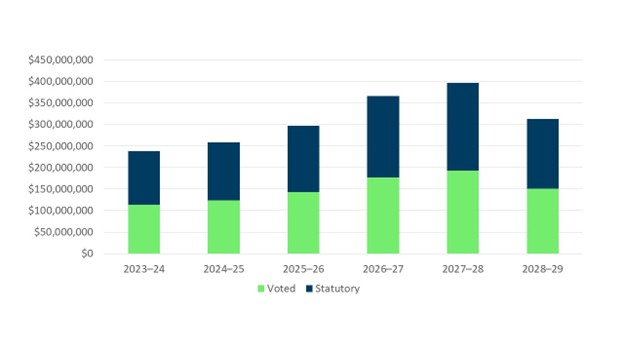
Text description of graph 1
| Fiscal year | Total | Voted | Statutory |
|---|---|---|---|
| 2023-24 | 11,745,320 | 113,381,349 | 125,127,669 |
| 2024-25 | 12,444,881 | 123,276,425 | 135,721,306 |
| 2025-26 | 12,090,890 | 142,677,855 | 154,768,745 |
| 2026-27 | 11,637,017 | 177,104,676 | 188,741,693 |
| 2027-28 | 11,431,978 | 192,373,955 | 203,805,933 |
| 2028-29 | 11,552,114 | 150,380,585 | 161,932,699 |
Analysis of statutory and voted funding over a six-year period
Beginning in 2023–24, CAS experienced a significant rise in SPA funding. These funds are strictly targeted to specific initiatives and cannot be used to support core operating requirements. Major initiatives funded through SPA funding include NCFMP and the DCM project. Based on the NCFMP funding profile, SPA funding represents nearly 50% of CAS’s planned spending in certain fiscal years, creating a funding structure with limited flexibility.
The fluctuation observed in CAS’s funding profile from 2023–24 to 2028–29 result primarily from temporary, time-limited allocations, including:
- NCFMP - $263.4 million over 6 years (2023–24 to 2028–29);
- SSDC initiative - $11.4 million over 2 years (2023-24 to 2024–25);
- DCM project - Definition phase - $6.2 million in 2025–26;
- Access to Justice in Both Official Languages - $9.1million over 3 years (2024–25 to 2026–27); and
- Compensation adjustments for recently signed collective agreements.
Planned spending for 2026–27 and beyond excludes all funding from Treasury Board central votes, such as the operating budget carry forward and reimbursements for expenditures such as severance pay and parental benefits.
Despite the recent influx of SPA funding, CAS continues to face escalating operational pressures. The Courts are experiencing substantial increases in both the volume and complexity of caseloads, most notably in immigration matters, where filings have quadrupled compared to pre-pandemic levels. Funding has not kept pace with this growth nor with new statutory obligations, resulting in mounting delays and backlogs. Compounding the strain on CAS’s reference levels are:
- The non-renewal of asylum-related funding, which CAS has been required to absorb;
- The temporary and insufficient funding for OLA obligations, set to sunset in March 2027; and
- The reliance on borrowed NCFMP funds in 2024–25, resulting in future repayment pressures.
These factors significantly erode the flexibility of CAS’s regular operating funding. More specifically, in 2024-25, CAS reallocated $4 million from the NCFMP SPA to address urgent operational pressures. This amount must be repaid in 2028–29. While this internal reallocation mitigated the most immediate and critical risks and pressures without requirement for new funding or additional authorities, several long-standing structural gaps remain unresolved.
CAS is facing persistent structural funding gaps, that left unaddressed, may further limit CAS’s ability to mitigate longstanding residual risks and vulnerabilities and impact CAS’s ability to provide necessary court operations and services to the judiciary, litigants and Canadians. For example:
- Most non-personnel expenses incurred by CAS are mandatory and directly tied to court operations including, for example: translation, courtroom security, court reporting, transcription, and digital hearing technology. These costs are driven entirely by hearing volumes, types, and durations and offer limited flexibility for reallocation.
- Budget 2024 provided only 25% of CAS’s initial funding request related to OLA obligations. CAS currently lacks the resources necessary to sustain day‑to‑day translation, revision, and publication of judicial decisions in both official languages and to address its backlog of approximately 1,900 decisions awaiting processing. When funding sunsets in March 2027, CAS’s ability to meet its obligations under the OLA will be significantly compromised, with the backlog projected to grow by 2,000 additional decisions per year. Complaints to the Commissioner of Official Languages, which have already more than doubled since 2023, are expected to increase further.
- The Federal Court continues to face dramatic and sustained increases in workload, driven primarily by growth in immigration filings. Annual immigration filings rose from 6,442 cases in 2020 to 24,673 in 2024, representing nearly a fourfold increase over five years. Preliminary 2025 data suggests filings will reach between 29,000 and 30,000 cases, representing unprecedented demand on the Courts and Registry. In parallel, the proportion of self-represented litigants has also risen sharply from 5% in 2022 to 23% in 2024, intensifying pressures on both the Federal Court and Registry.
CAS will seek additional sustainable funding through the upcoming Federal Budget and is developing a multi-year funding strategy to stabilize operations. Concurrently, CAS will continue to streamline and optimize services, processes, and organizational structures to enhance productivity and improve service delivery. Efforts will focus on digitization, and automation and continued strategic realignment of internal resources. While these measures will improve operational efficiency, they cannot resolve the structural funding shortfalls that impede CAS’s ability to support the Courts and meet its statutory obligations. Sustainable, long‑term funding remains essential to ensuring that CAS can continue to deliver timely, accessible, and effective justice services to all Canadians.
For further information on CAS’s departmental appropriations, consult the 2026-27 Main Estimates.
Future-oriented condensed statement of operations
The future-oriented condensed statement of operations provides an overview of CAS’s operations for 2025-26 to 2026-27.
Table 10 Future-oriented condensed statement of operations for the year ended March 31, 2027 (dollars)
| Financial information | 2025-26 Forecast results | 2026-27 Planned results | Difference (forecasted results minus planned) |
|---|---|---|---|
| Total expenses | 186,836,000 | 218,679,000 | 31,843,000 |
| Total revenues | 0 | 0 | 0 |
| Net cost of operations before government funding and transfers | 186,836,000 | 218,679,000 | 31,843,000 |
Analysis of forecasted and planned results
The increase in expenses from the 2025-26 forecasted results to 2026–27 planned results reflects the spending profile under the NCFMP and the anticipated advancement or completion of several major capital projects scheduled for delivery in 2026-27.
A more detailed Future-Oriented Statement of Operations and associated Notes for 2026-27, including a reconciliation of the net cost of operations with the requested authorities, is available on CAS’s website.
Human resources
This section presents an overview of the department’s actual and planned human resources from 2023-24 to 2028-29.
Table 11: Actual human resources for core responsibilities and internal services
| Core responsibilities and Internal Services | 2023-24 Actual full-time equivalents | 2024-25 Actual full-time equivalents | 2025-26 Forecasted full-time equivalents |
|---|---|---|---|
| Administration services supporting Canada’s national Courts | 597 | 618 | 641 |
| Subtotal | 597 | 618 | 641 |
| Internal services | 244 | 266 | 206 |
| Total | 841 | 884 | 847 |
Analysis of human resources over the last three years
The increase in actual full-time equivalents (FTEs) from 2023–24 to 2024–25 is primarily attributable to new funding received for major initiatives, including the NCFMP and SSDC initiative, as well as staffing to support newly created judicial positions. Additional capacity was also added to meet the translation, revision, and publication requirements under the OLA. When this temporary funding sunsets in March 2027, CAS will not have the resources required to maintain these functions, and the backlog will continue to increase by approximately 2,000 additional decisions per year, limiting Canadians’ ability to access judicial decisions in their official language of choice.
The decrease in planned FTEs from 2024–25 to 2025–26 reflects workforce adjustments and other cost-cutting measures implemented to operate within reduced funding levels. These measures include:
- Establishing new baselines and multi-year budgets;
- Strengthening oversight of indeterminate staffing;
- Optimizing and restructuring the organization;
- Strengthening integrated planning;
- Regularly reassessing and realigning resources with key priorities; and
- Identifying efficiencies across operations.
Table 12: Human resources planning summary for core responsibilities and internal services
| Core responsibilities and Internal Services | 2026-27 Planned full-time equivalents | 2027-28 Planned full-time equivalents | 2028-29 Planned full-time equivalents |
|---|---|---|---|
| Administration services supporting Canada’s national Courts | 634 | 622 | 635 |
| Subtotal | 634 | 622 | 635 |
| Internal services | 199 | 199 | 199 |
| Total | 833 | 821 | 834 |
Analysis of human resources for the next three years
Between 2025–26 and 2026–27, the net decrease of 14 planned FTEs is primarily due to the sunsetting of funding for the DCM project – Definition Phase (–32 FTEs). This reduction is partially offset by an increase in resources required to advance NCFMP Phases 1 and 2 (+18 FTEs). Although CAS will continue to implement the next phases of the DCM project, the associated funding and FTE requirements will not be reflected in CAS’s reference levels until approved by the central agencies.
Between 2026–27 and 2027–28, the net decrease of 12 planned FTEs is mainly driven by the end of sunsetting of temporary funding for OLA (–10 FTEs), which began in 2024–25, as well as a reduction in resources supporting NCFMP Phases 1 and 2 (–2 FTEs).
Between 2027–28 and 2028–29, the net increase of 13 planned FTEs reflects the funding profile associated with advancing NCFMP Phases 1 and 2.
Federal tax expenditures
CAS’s Departmental Plan does not include information on tax expenditures.
The tax system can be used to achieve public policy objectives through the application of special measures such as low tax rates, exemptions, deductions, deferrals and credits. The Department of Finance Canada publishes cost estimates and projections for these measures each year in the Report on Federal Tax Expenditures.
This report also provides detailed background information on tax expenditures, including descriptions, objectives, historical information and references to related federal spending programs as well as evaluations and GBA Plus of tax expenditures.
Corporate information
Departmental profile
Appropriate minister(s):
The Honourable Sean Fraser, P.C., M.P.
Institutional head:
Darlene H. Carreau LL.B., Chief Administrator and Chief Executive Officer
Ministerial portfolio:
Justice
Enabling instrument(s):
Year of incorporation / commencement:
2003
Departmental contact information
Mailing address:
Courts Administration Service
D’Arcy McGee Building
90 Sparks Street
Ottawa, ON K1A 0H9
Telephone:
613-567-7010
Email:
Website(s):
Definitions
List of terms
- appropriation(crédit)
- Any authority of Parliament to pay money out of the Consolidated Revenue Fund.
- budgetary expenditures(dépenses budgétaires)
- Operating and capital expenditures; transfer payments to other levels of government, departments or individuals; and payments to Crown corporations.
- core responsibility (responsabilité essentielle)
- An enduring function or role performed by a department. The intentions of the department with respect to a core responsibility are reflected in one or more related departmental results that the department seeks to contribute to or influence.
- Departmental Plan (plan ministériel)
- A report on the plans and expected performance of an appropriated department over a 3year period. Departmental Plans are usually tabled in Parliament each spring.
- departmental result (résultat ministériel)
- A consequence or outcome that a department seeks to achieve. A departmental result is often outside departments’ immediate control, but it should be influenced by program-level outcomes.
- departmental result indicator (indicateur de résultat ministériel)
- A quantitative measure of progress on a departmental result.
- departmental results framework (cadre ministériel des résultats)
- A framework that connects the department’s core responsibilities to its departmental results and departmental result indicators.
- Departmental Results Report (rapport sur les résultats ministériels)
- A report on a department’s actual accomplishments against the plans, priorities and expected results set out in the corresponding Departmental Plan.
- full-time equivalent (équivalent temps plein)
- A measure of the extent to which an employee represents a full person-year charge against a departmental budget. For a particular position, the full-time equivalent figure is the ratio of number of hours the person actually works divided by the standard number of hours set out in the person’s collective agreement.
- gender-based analysis plus (GBA Plus) (analyse comparative entre les sexes plus [ACS Plus])
-
Is an analytical tool used to support the development of responsive and inclusive policies, programs, and other initiatives. GBA Plus is a process for understanding who is impacted by the issue or opportunity being addressed by the initiative; identifying how the initiative could be tailored to meet diverse needs of the people most impacted; and anticipating and mitigating any barriers to accessing or benefitting from the initiative. GBA Plus is an intersectional analysis that goes beyond biological (sex) and socio-cultural (gender) differences to consider other factors, such as age, disability, education, ethnicity, economic status, geography (including rurality), language, race, religion, and sexual orientation.
Using GBA Plus involves taking a gender- and diversity-sensitive approach to our work. Considering all intersecting identity factors as part of GBA Plus, not only sex and gender, is a Government of Canada commitment.
- government priorities (priorités gouvernementales)
- For the purpose of the 2026-27 Departmental Plan, government priorities are the high-level themes outlining the government’s agenda in the 2025 Speech from the Throne.
- horizontal initiative (initiative horizontale)
- An initiative where two or more federal departments are given funding to pursue a shared outcome, often linked to a government priority.
- Indigenous business (entreprise autochtones)
- Requirements for verifying Indigenous businesses for the purposes of the departmental result report are available through the Indigenous Services Canada Mandatory minimum 5% Indigenous procurement target website.
- non budgetary expenditures (dépenses non budgétaires)
- Non-budgetary authorities that comprise assets and liabilities transactions for loans, investments and advances, or specified purpose accounts, that have been established under specific statutes or under non-statutory authorities in the Estimates and elsewhere. Non-budgetary transactions are those expenditures and receipts related to the government's financial claims on, and obligations to, outside parties. These consist of transactions in loans, investments and advances; in cash and accounts receivable; in public money received or collected for specified purposes; and in all other assets and liabilities. Other assets and liabilities, not specifically defined in G to P authority codes are to be recorded to an R authority code, which is the residual authority code for all other assets and liabilities.
- performance (rendement)
- What a department did with its resources to achieve its results, how well those results compare to what the department intended to achieve, and how well lessons learned have been identified.
- performance indicator (indicateur de rendement)
- A qualitative or quantitative means of measuring an output or outcome, with the intention of gauging the performance of a department, program, policy or initiative respecting expected results.
- plan (plan)
- The articulation of strategic choices, which provides information on how a department intends to achieve its priorities and associated results. Generally, a plan will explain the logic behind the strategies chosen and tend to focus on actions that lead to the expected result.
- planned spending (dépenses prévues)
-
For Departmental Plans and Departmental Results Reports, planned spending refers to those amounts presented in Main Estimates.
A department is expected to be aware of the authorities that it has sought and received. The determination of planned spending is a departmental responsibility, and departments must be able to defend the expenditure and accrual numbers presented in their Departmental Plans and Departmental Results Reports.
- program (programme)
- Individual or groups of services, activities or combinations thereof that are managed together within the department and focus on a specific set of outputs, outcomes or service levels.
- program inventory (répertoire des programmes)
- Identifies all the department’s programs and describes how resources are organized to contribute to the department’s core responsibilities and results.
- result (résultat)
- A consequence attributed, in part, to a department, policy, program or initiative. Results are not within the control of a single department, policy, program or initiative; instead they are within the area of the department’s influence.
- statutory expenditures (dépenses législatives)
- Expenditures that Parliament has approved through legislation other than appropriation acts. The legislation sets out the purpose of the expenditures and the terms and conditions under which they may be made.
- target (cible)
- A measurable performance or success level that a department, program or initiative plans to achieve within a specified time period. Targets can be either quantitative or qualitative.
- voted expenditures (dépenses votées)
- Expenditures that Parliament approves annually through an appropriation act. The vote wording becomes the governing conditions under which these expenditures may be made.
- Date modified: